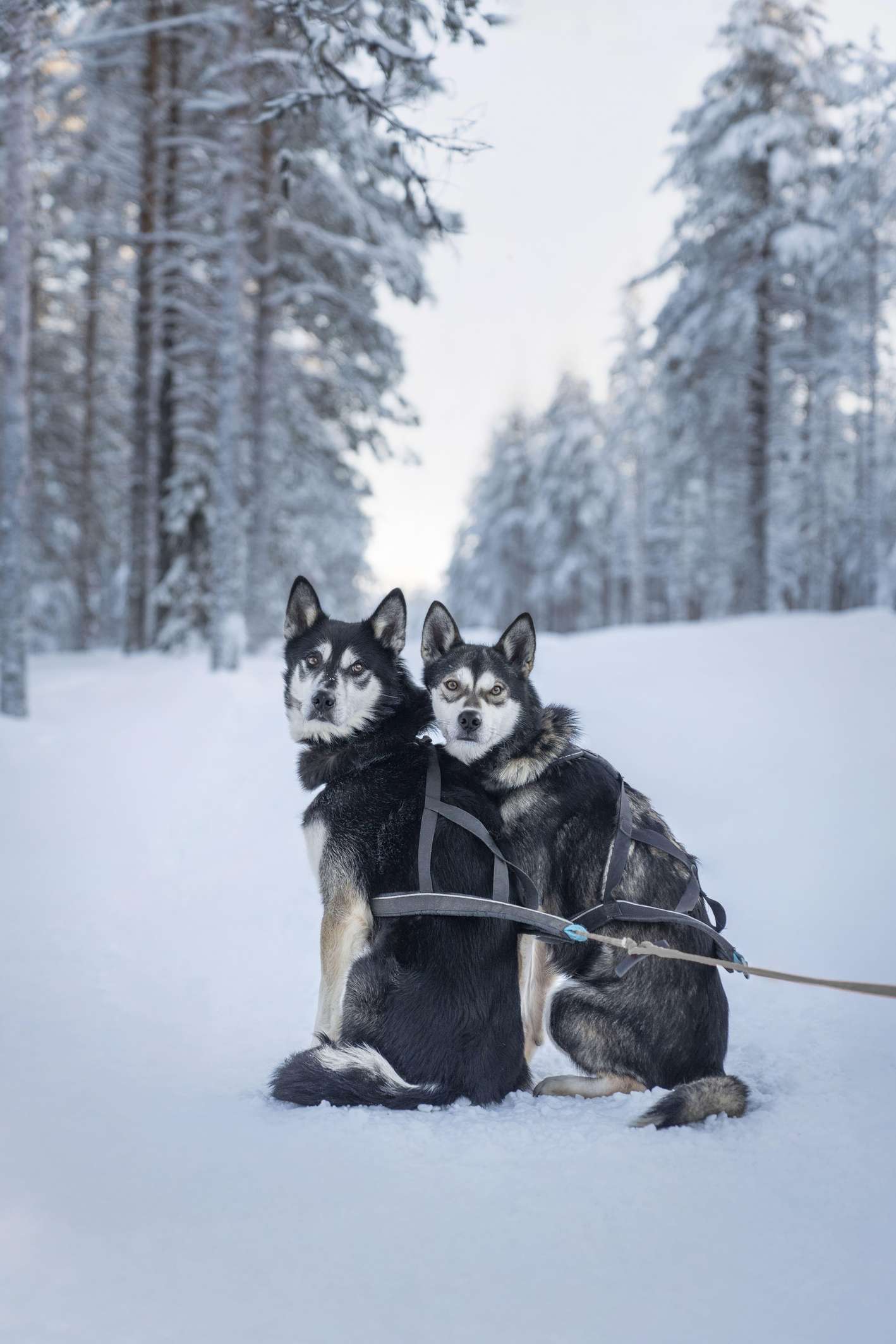
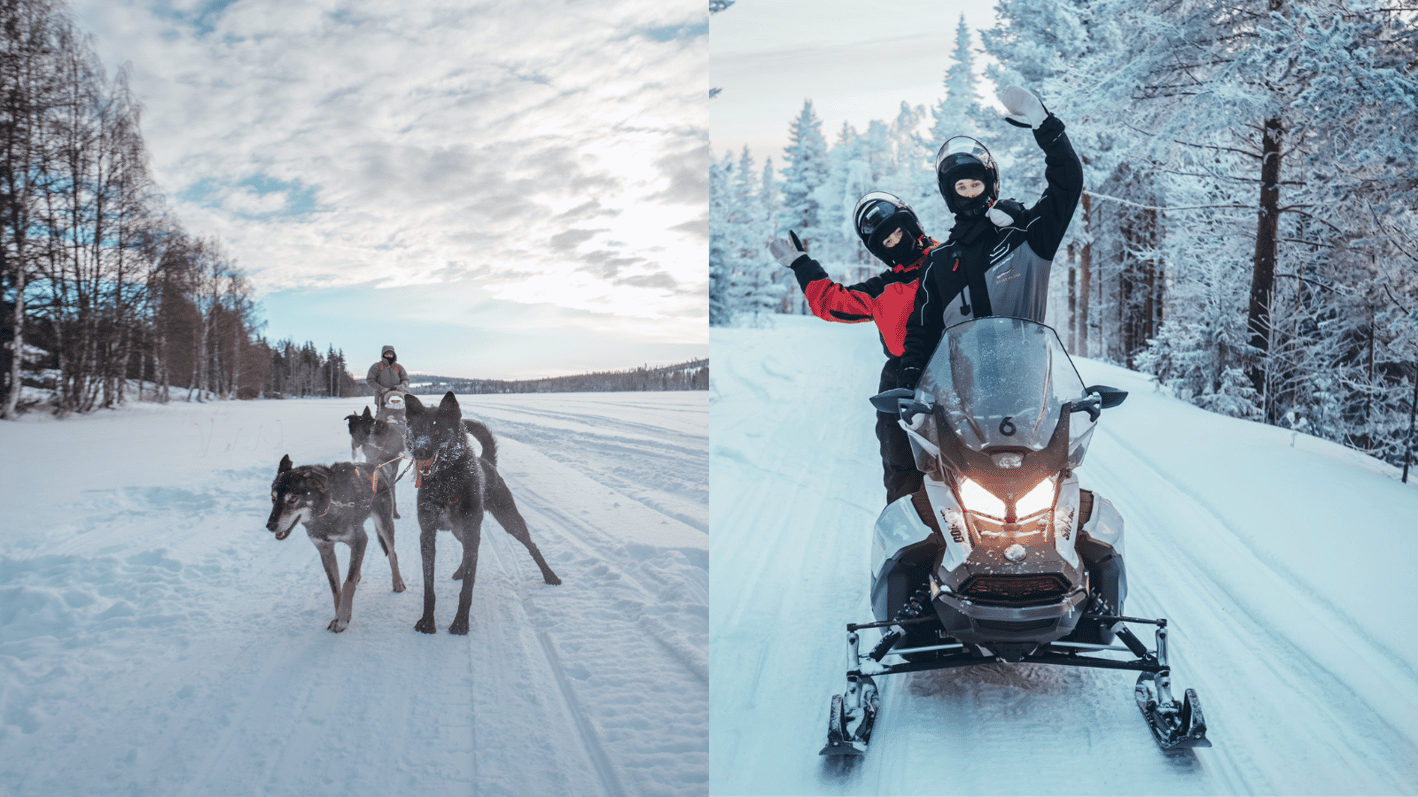
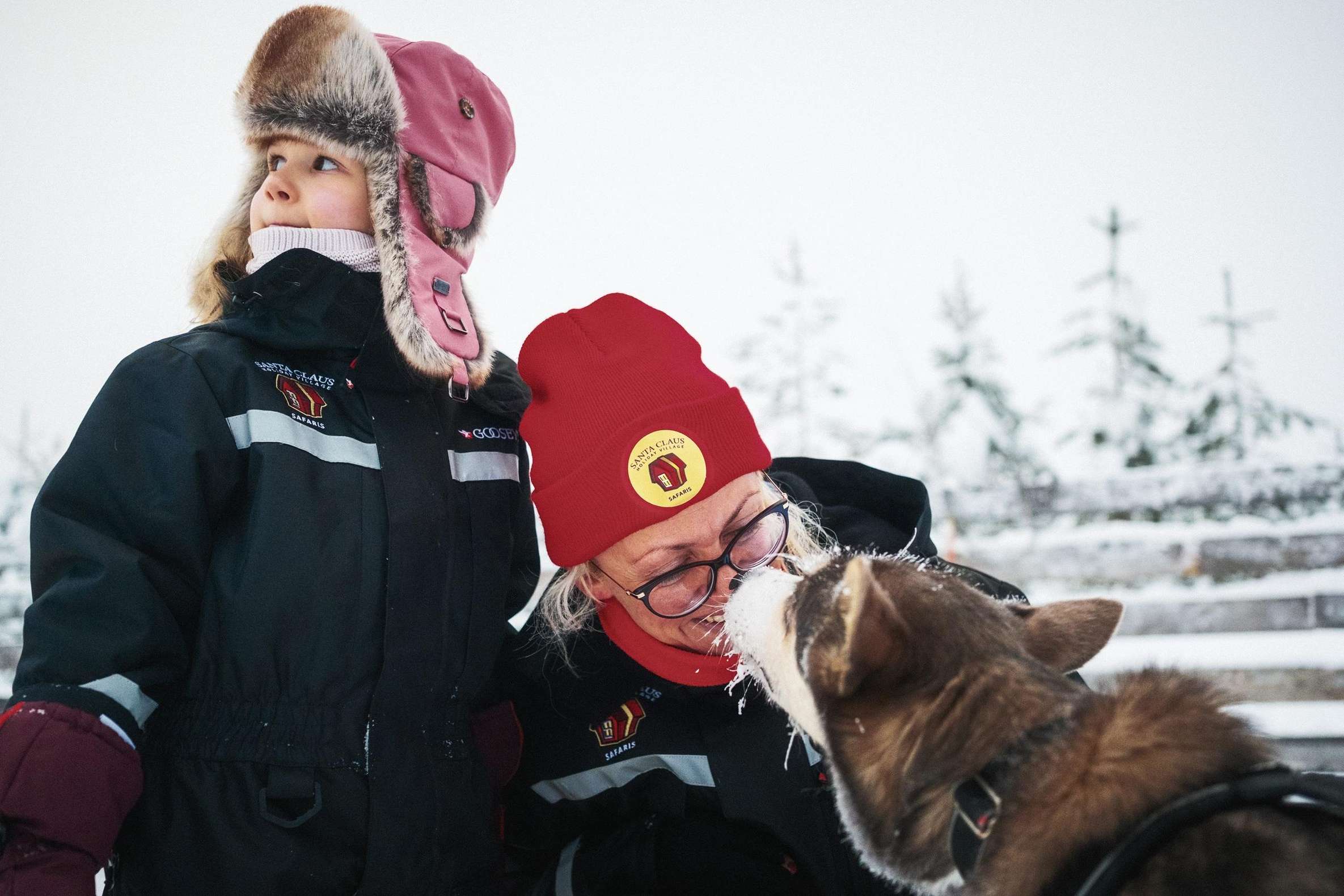
Husky Safari 5km in Rovaniemi - Trail Time and Sled Ride Options
Drive your own husky team on a real 5km forest trail in Rovaniemi. Take the sled, swap driving duties at the halfway point, then meet the dogs and warm up by an open fire. With thermal overalls, transfers and guided mushing basics included, one booking covers the whole morning.
A 5 km run in Rovaniemi comes in two shapes: you drive the sled yourself, or a musher drives while you sit wrapped in blankets. The choice comes down to how much you want to do. If you want your hands on the handlebar, pick a self-drive safari. If you would rather watch the dogs work, a guided ride does that for you.
Driving ageYou must be 18 or older to drive a husky sled. Anyone under 18 rides as a seated passenger.
PregnancyHusky safaris are not recommended for pregnant travelers, and self-drive tours also rule out people with back problems. The ride can be bumpy with sudden movements.
Cold limitsOperators shorten 5 km runs between -28°C and -30°C and suspend self-drive tours between -30°C and -35°C, offering a full refund or a shortened musher-driven ride instead.
SnowWhen trails lack snow, teams pull wheeled carts or the ride distance gets shortened, so the safari runs in some form most of the season.
WeightCombined sled limits for a self-drive pair sit between 160 kg and 250 kg depending on the operator, so heavier pairs should check the limit before booking.
BookingDecember and Christmas week slots sell out three to six months ahead, with mid-December through early January often fully booked by September.
Ride timeExpect roughly 10 to 30 minutes actively on the sled for a 5 km trail, inside a total tour of about 1.5 to 4.5 hours door to door.
Group minimumsSeveral tours need a minimum number of participants to run, and small groups may be rescheduled or refunded.
Swap rulesMost self-drive pairs take turns at the wheel halfway through, but one tour operator forbids changing the driver during the run.
documentYou must be at least 18 years old to drive a husky sled on a 5km safari, and anyone under 18 rides as a passenger inside the sled.
Plan your group around this rule: an adult in each pair drives while children sit wrapped in blankets in the sled basket. If someone in your party is pregnant or has a back problem, book a guide-driven ride instead, since self-drive tours list both as not suitable.
Which safari 5km husky ride suits you best
some 5 km runs take only 10-15 min
Ride as a passenger
135 minutes·English
4.8(129)
Running with the Pack, 5km Husky Ride and a Kennel Tour
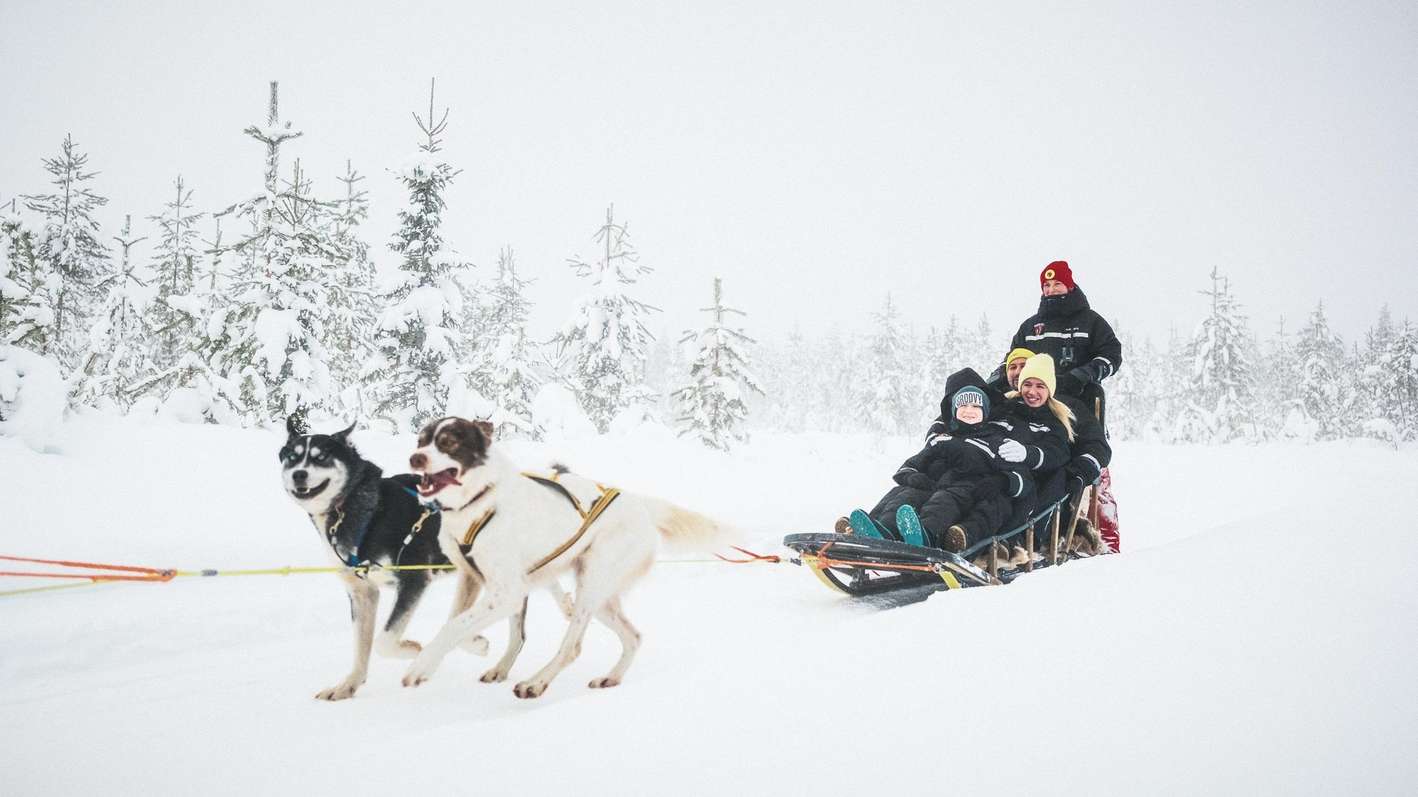
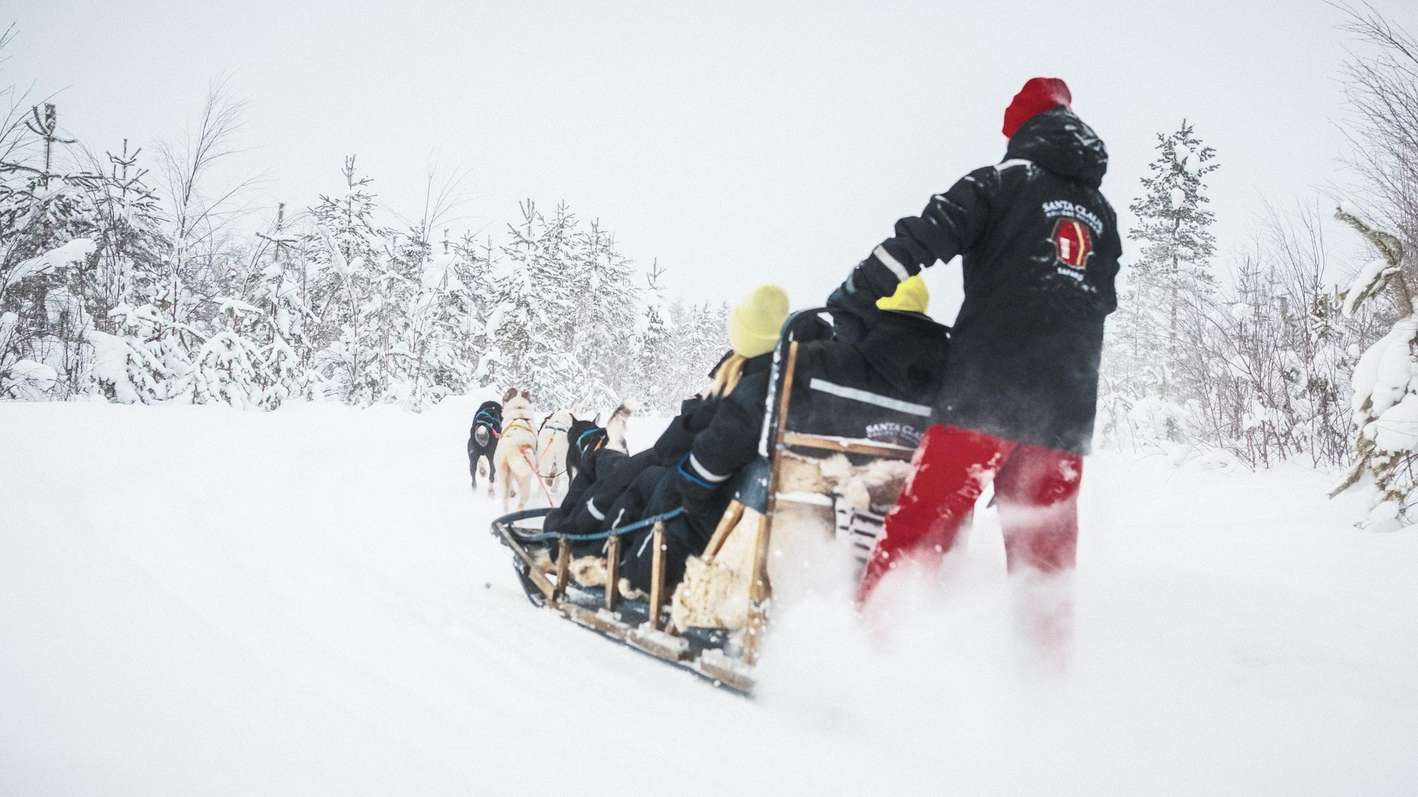
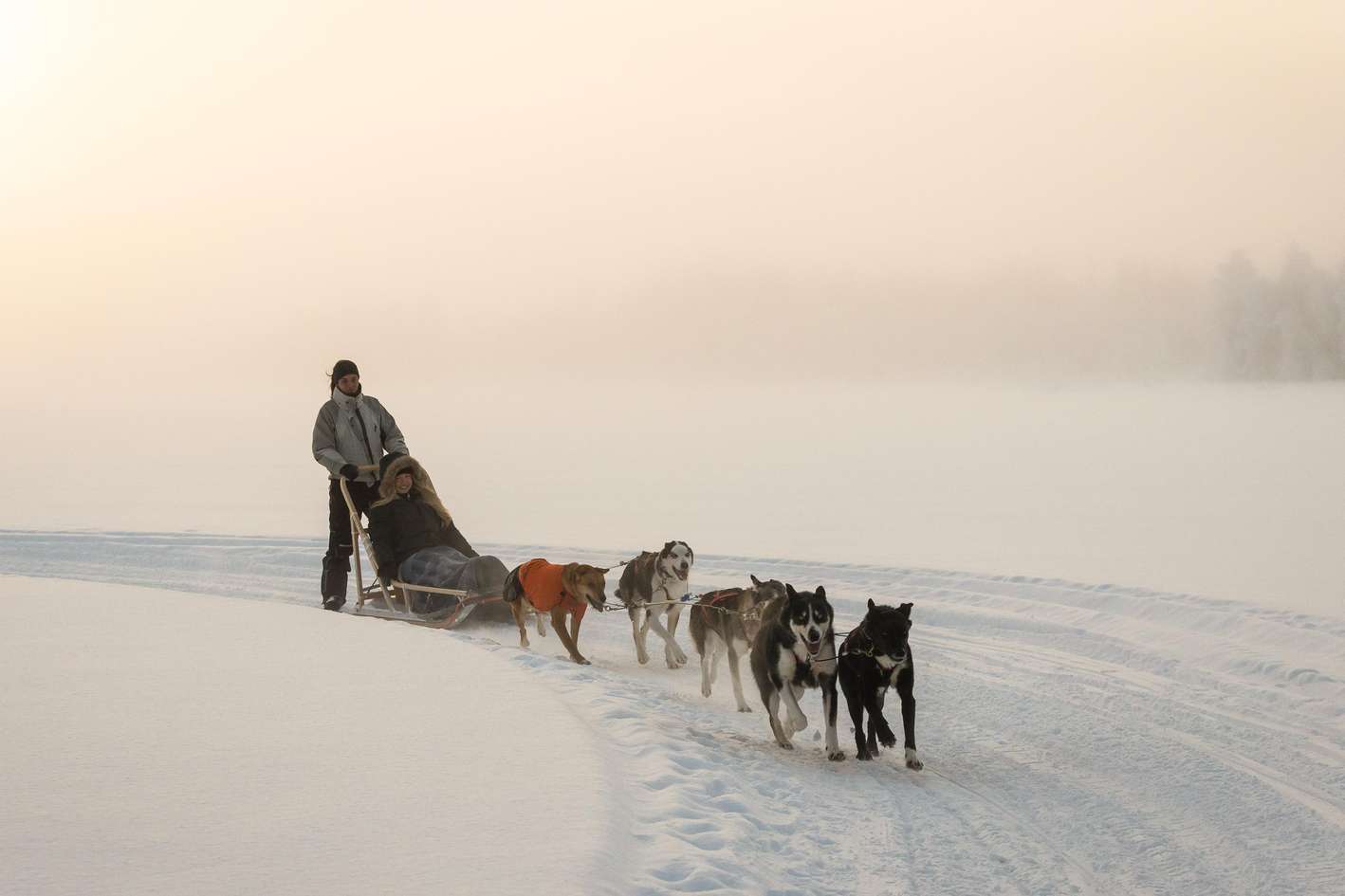
An experienced musher drives the whole 5 km, so you sit back and watch the forest go by while a kennel tour is included.
Free cancellationHotel pickup includedHot juice and cookies
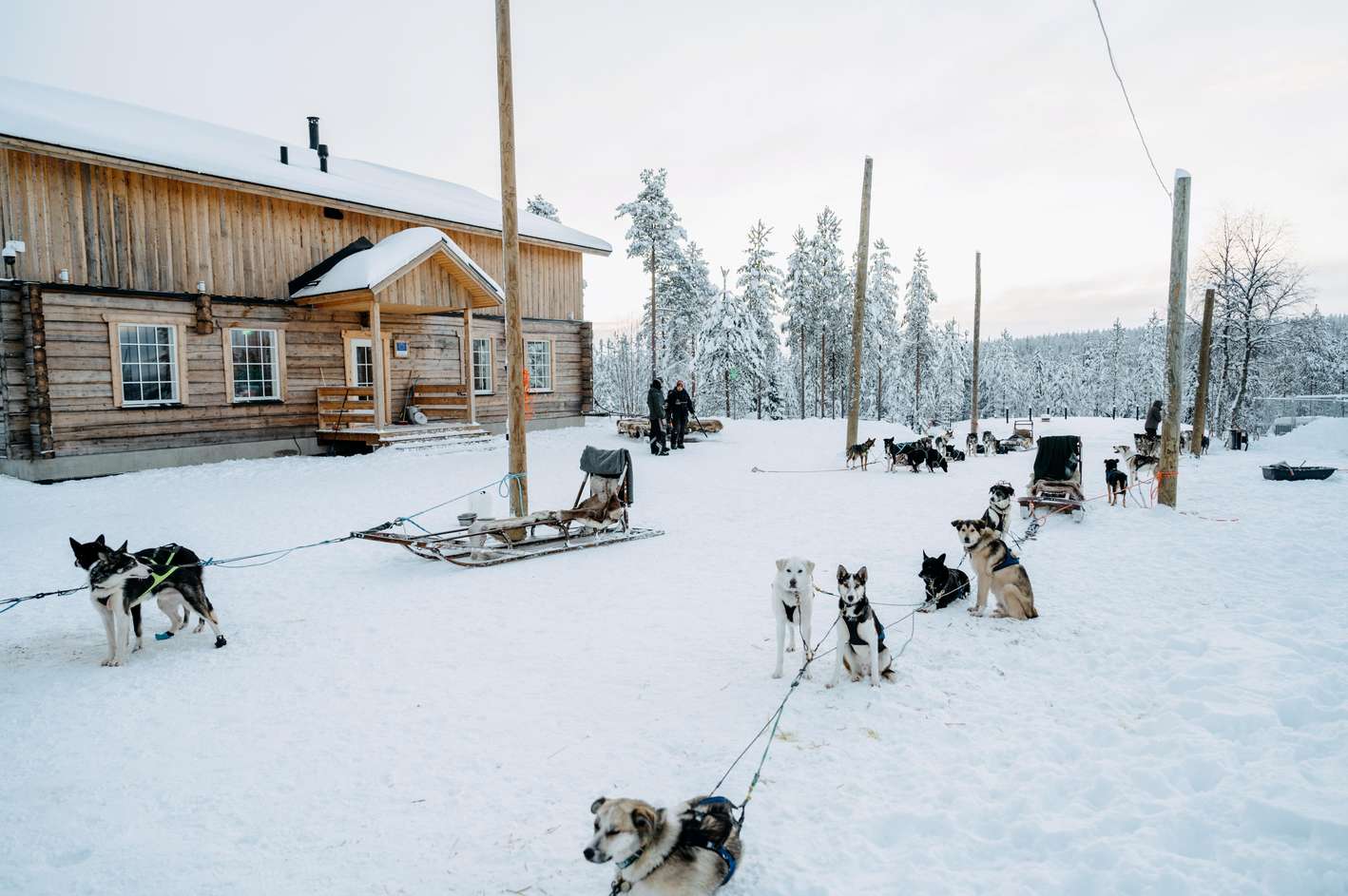
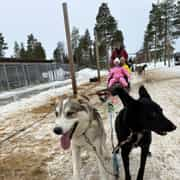
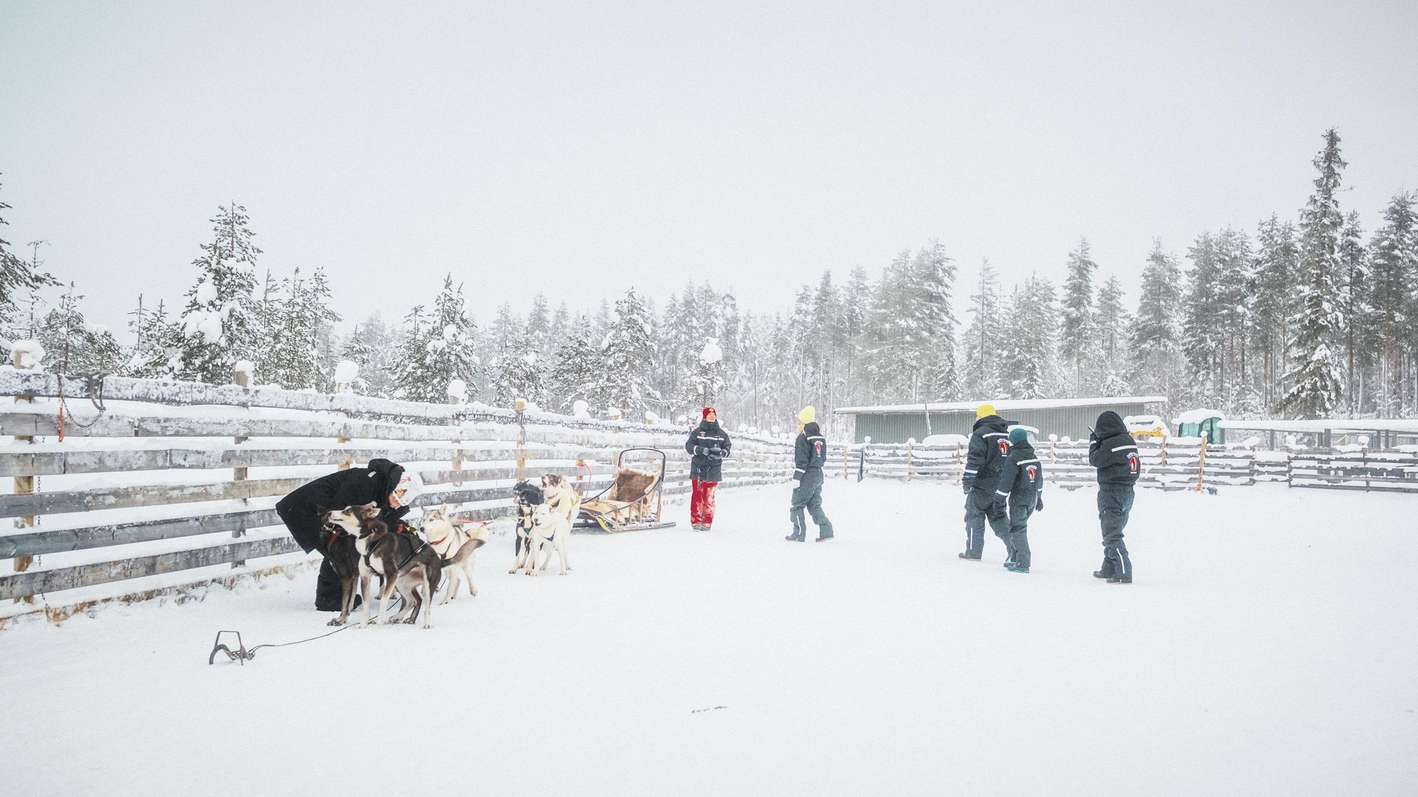
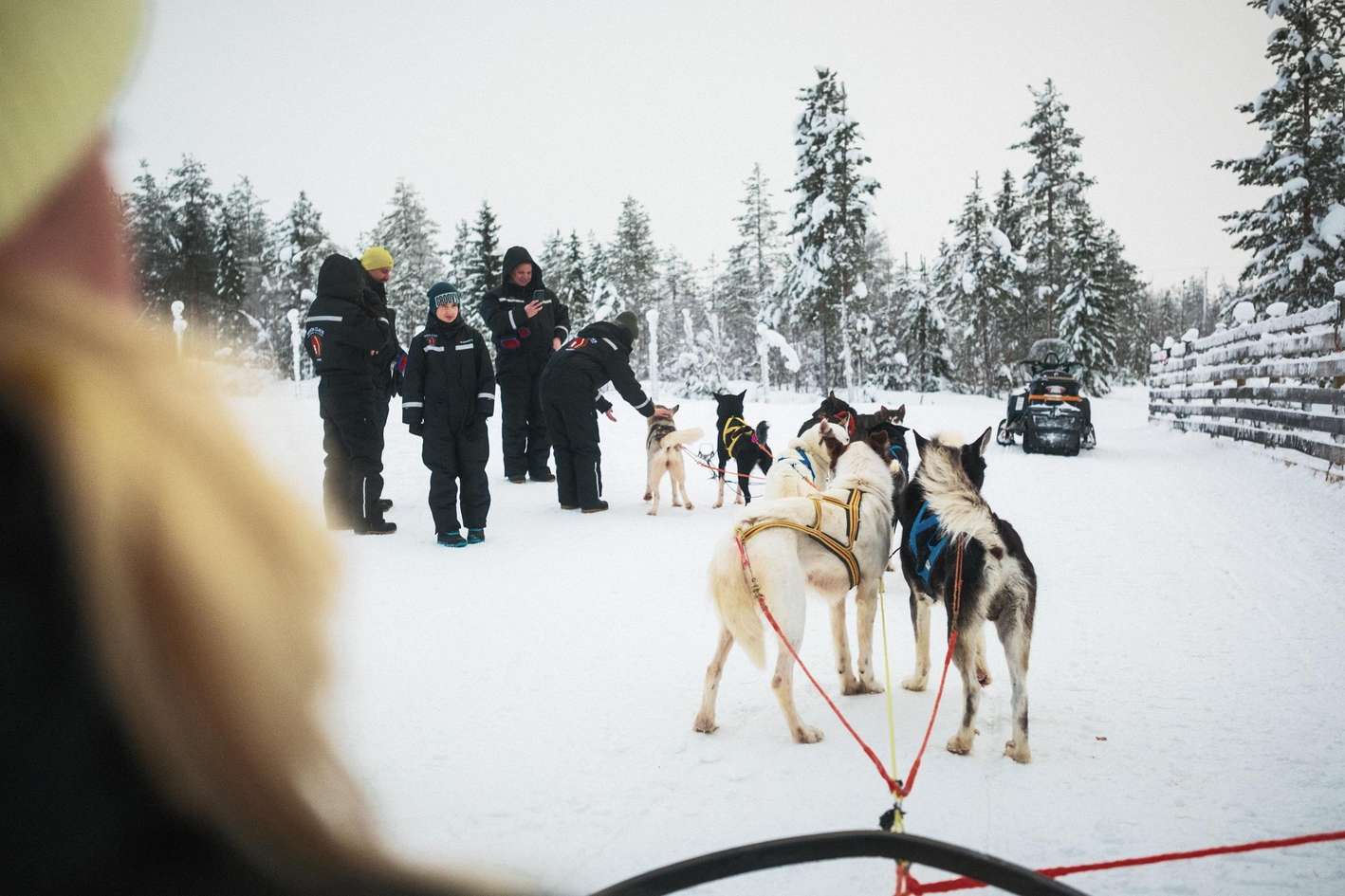
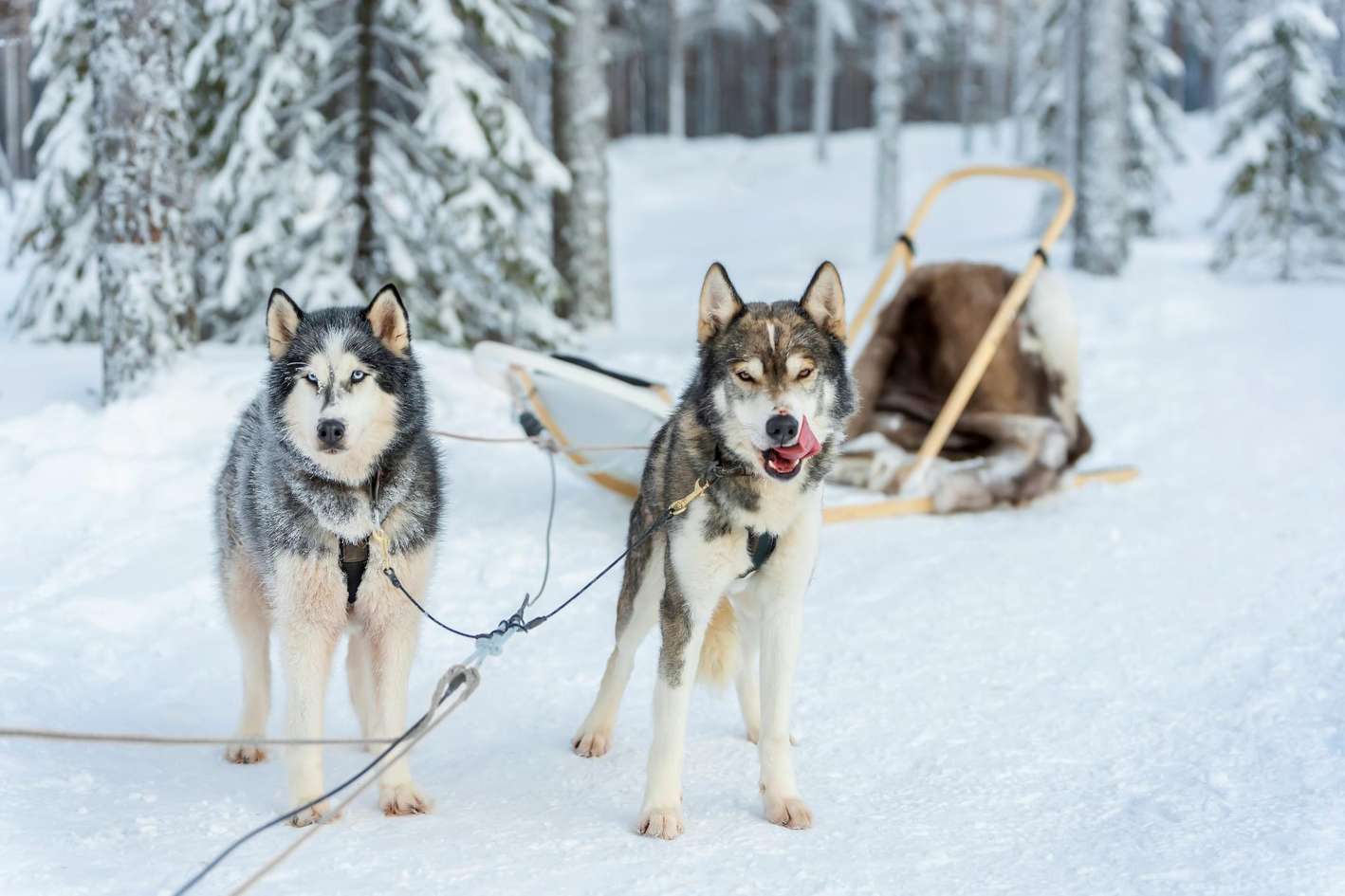
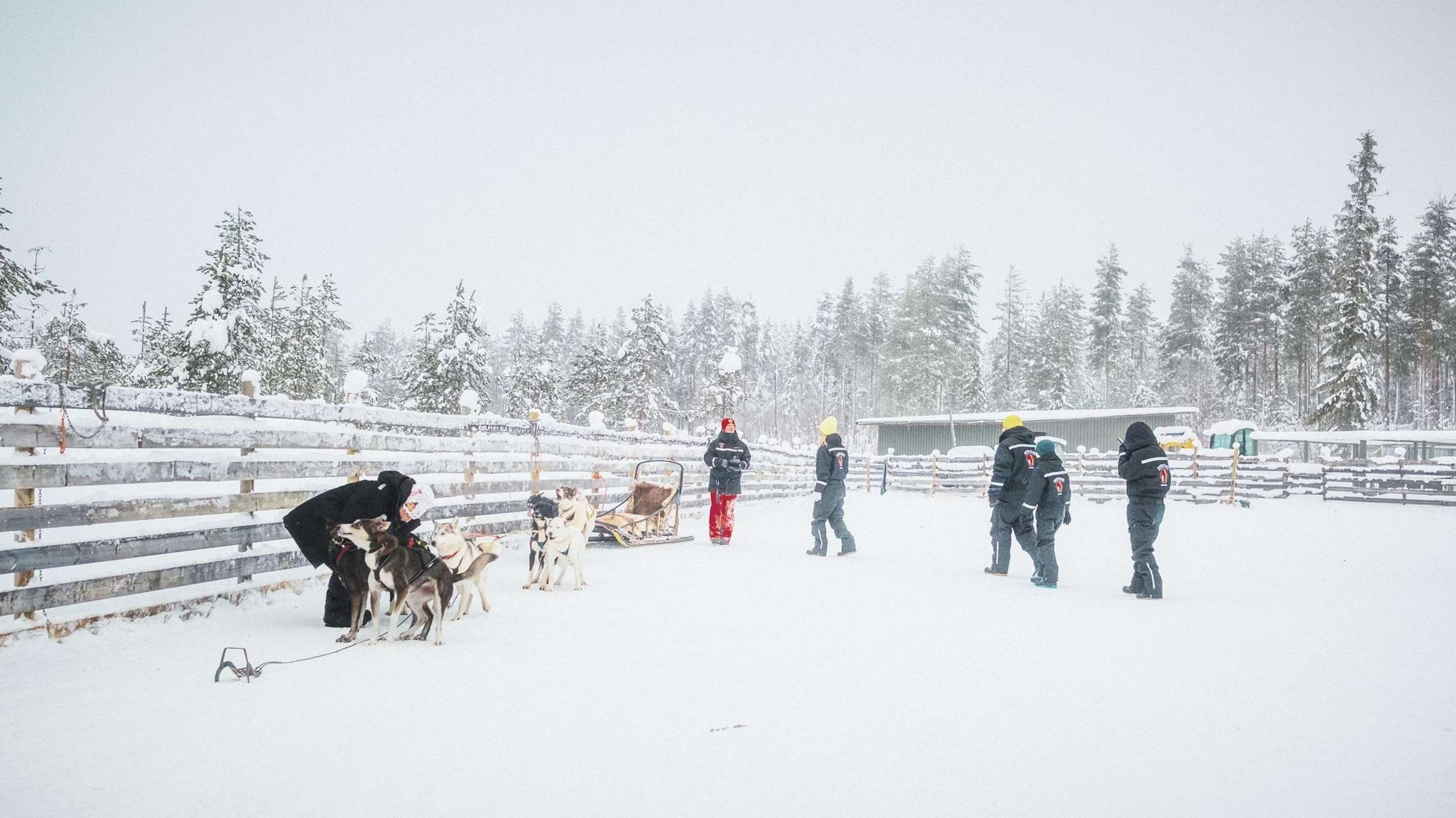
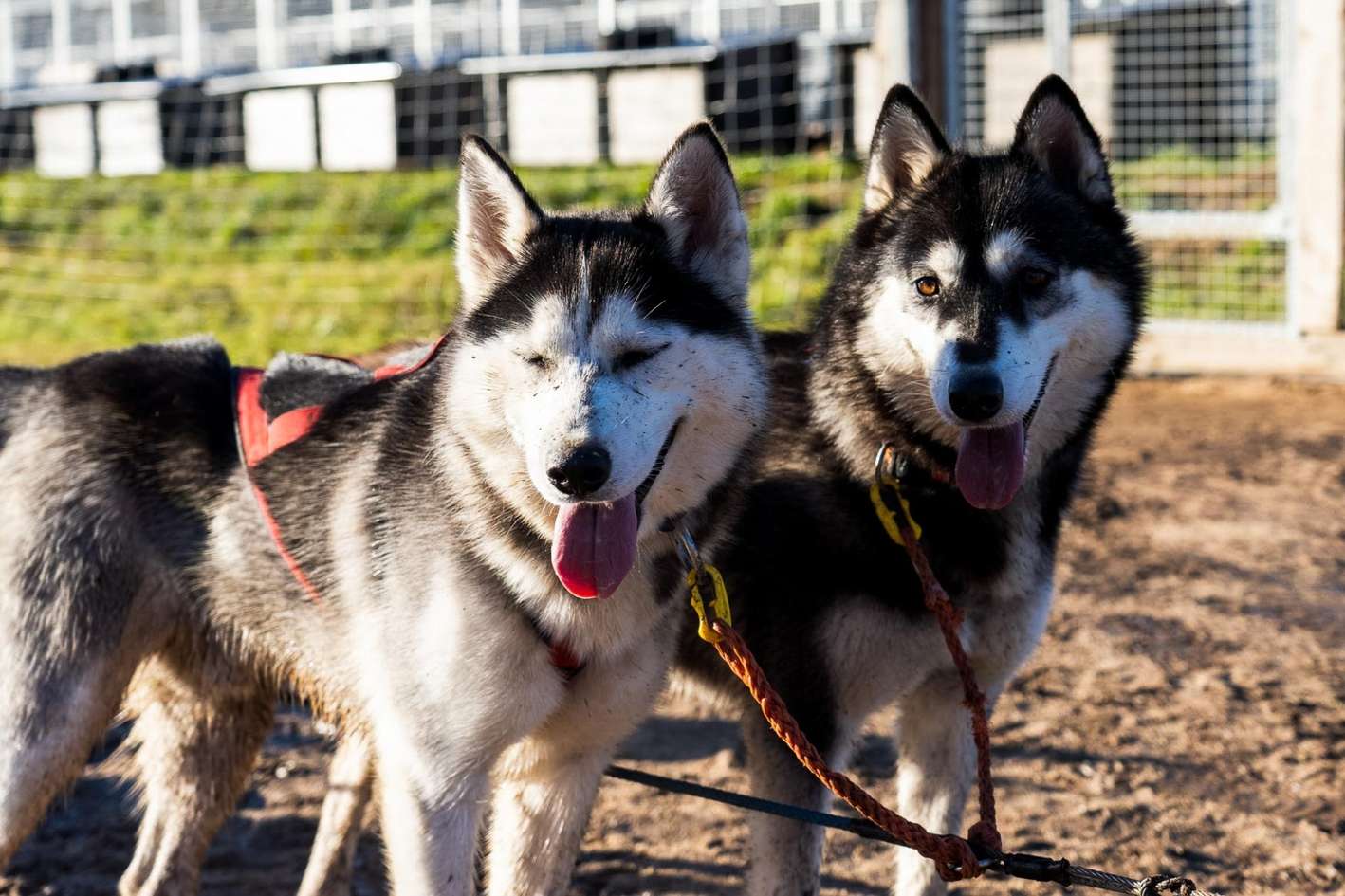
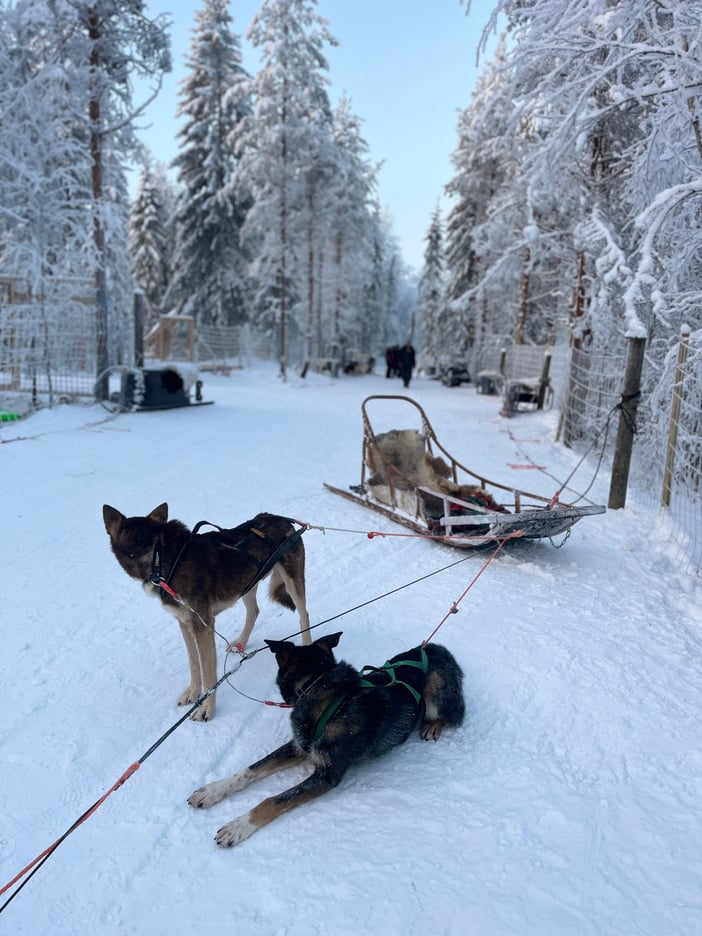
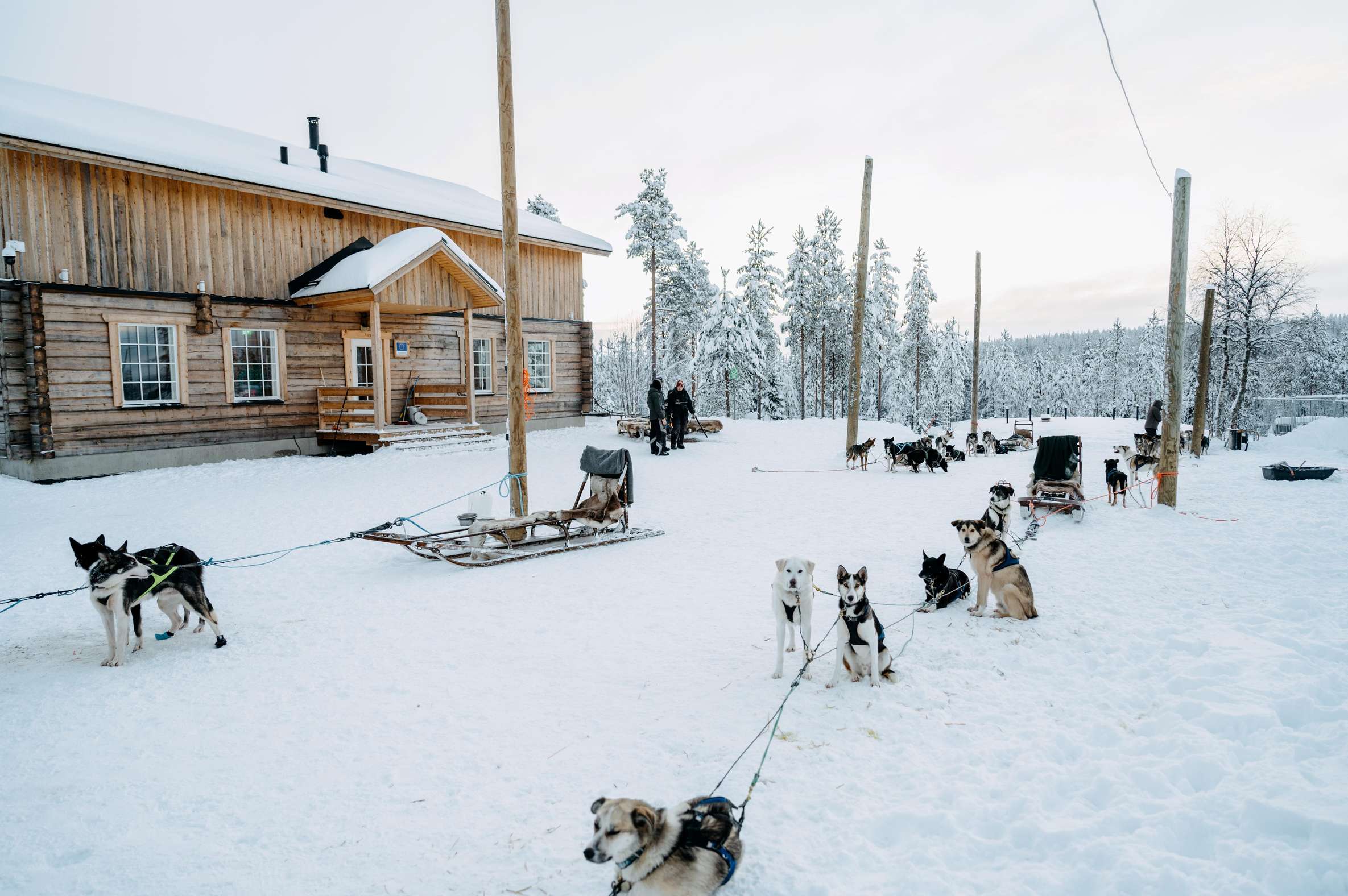
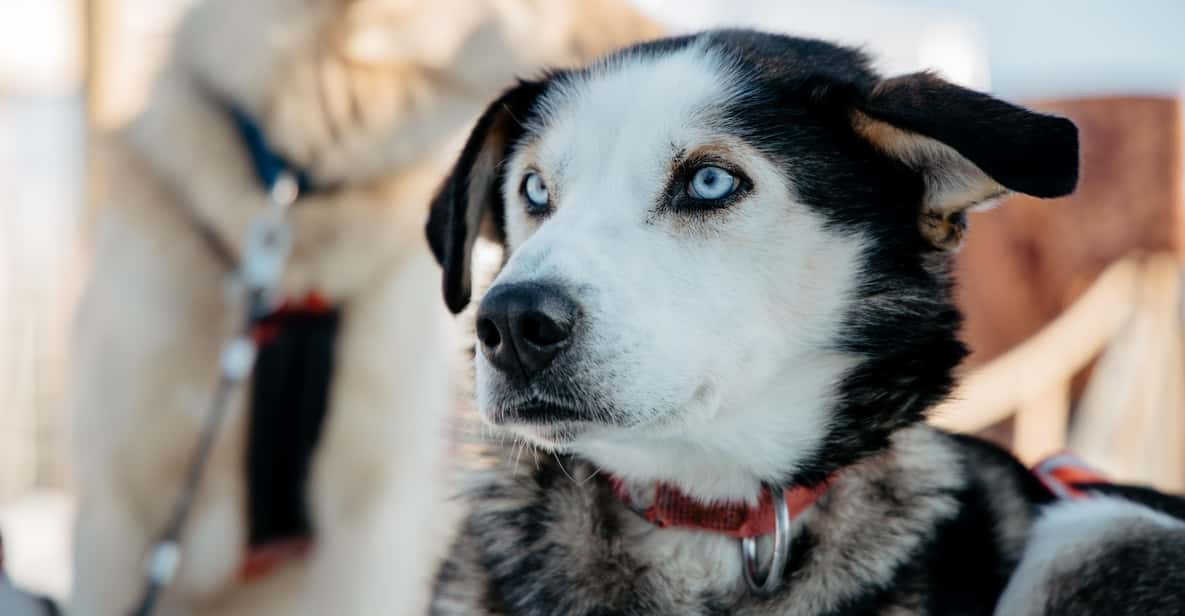
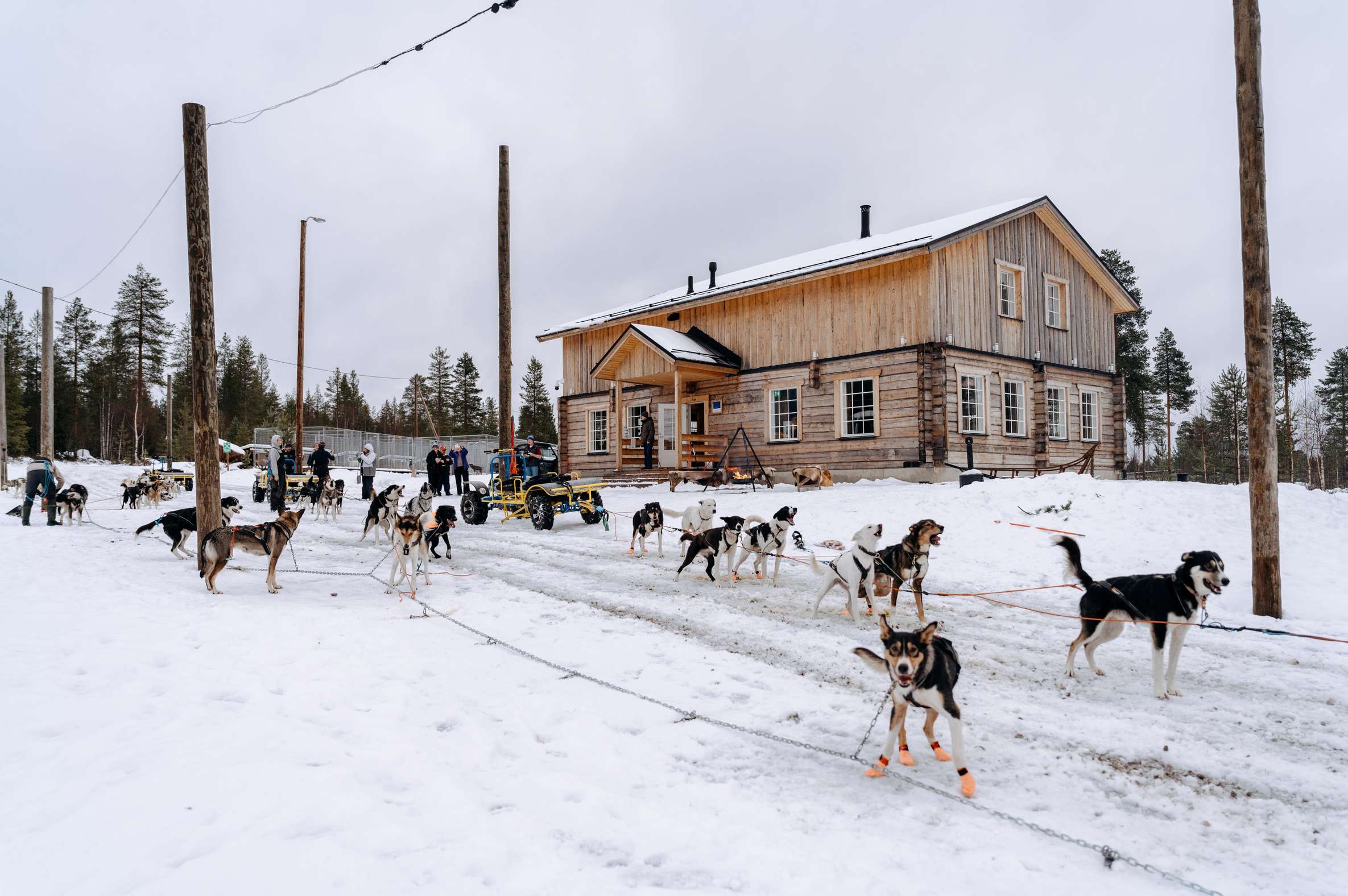
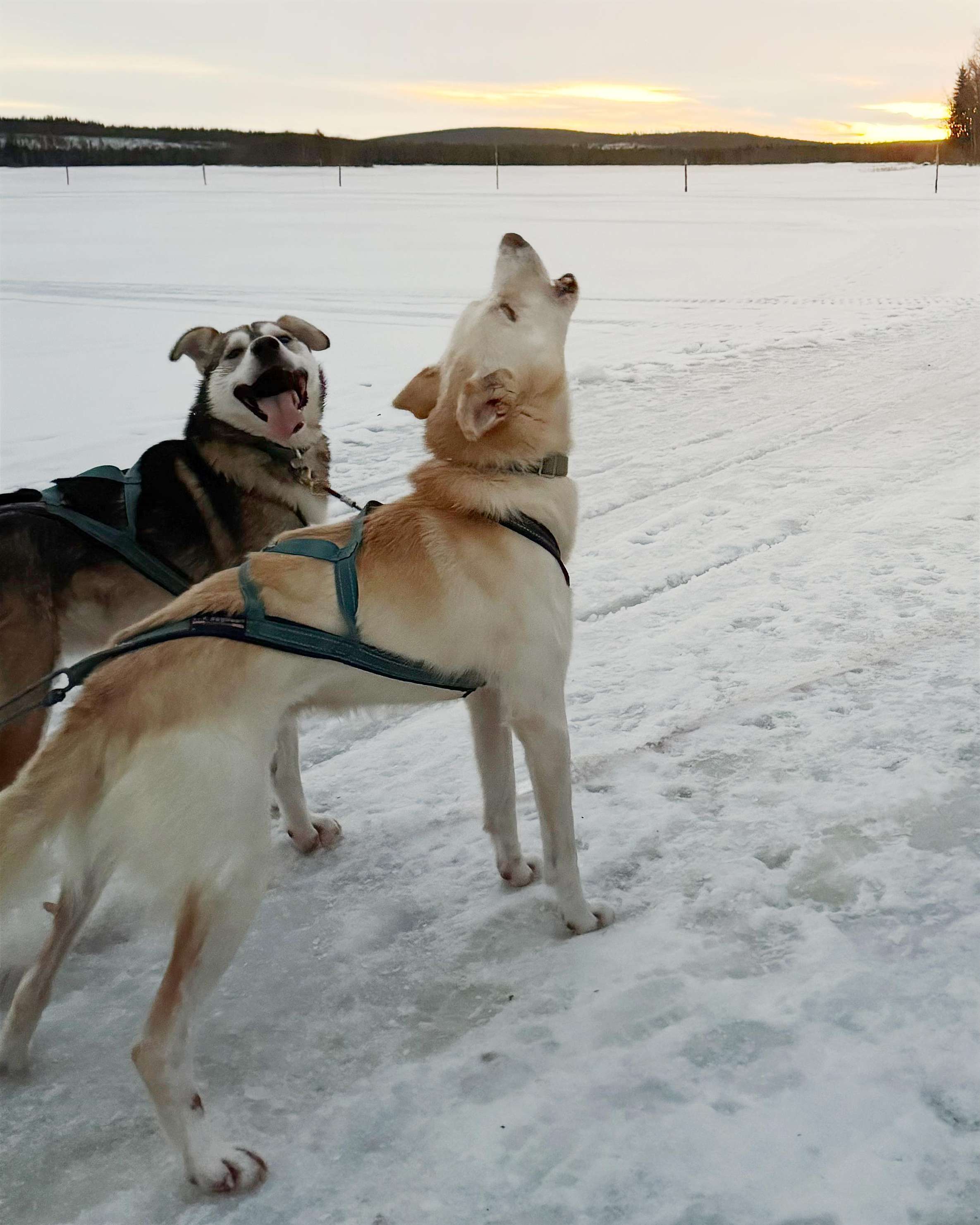
The first thing worth seeing is the kennel yard: Alaskan huskies bouncing at their fences and howling in chorus the moment harnesses come out. Then the forest takes over.
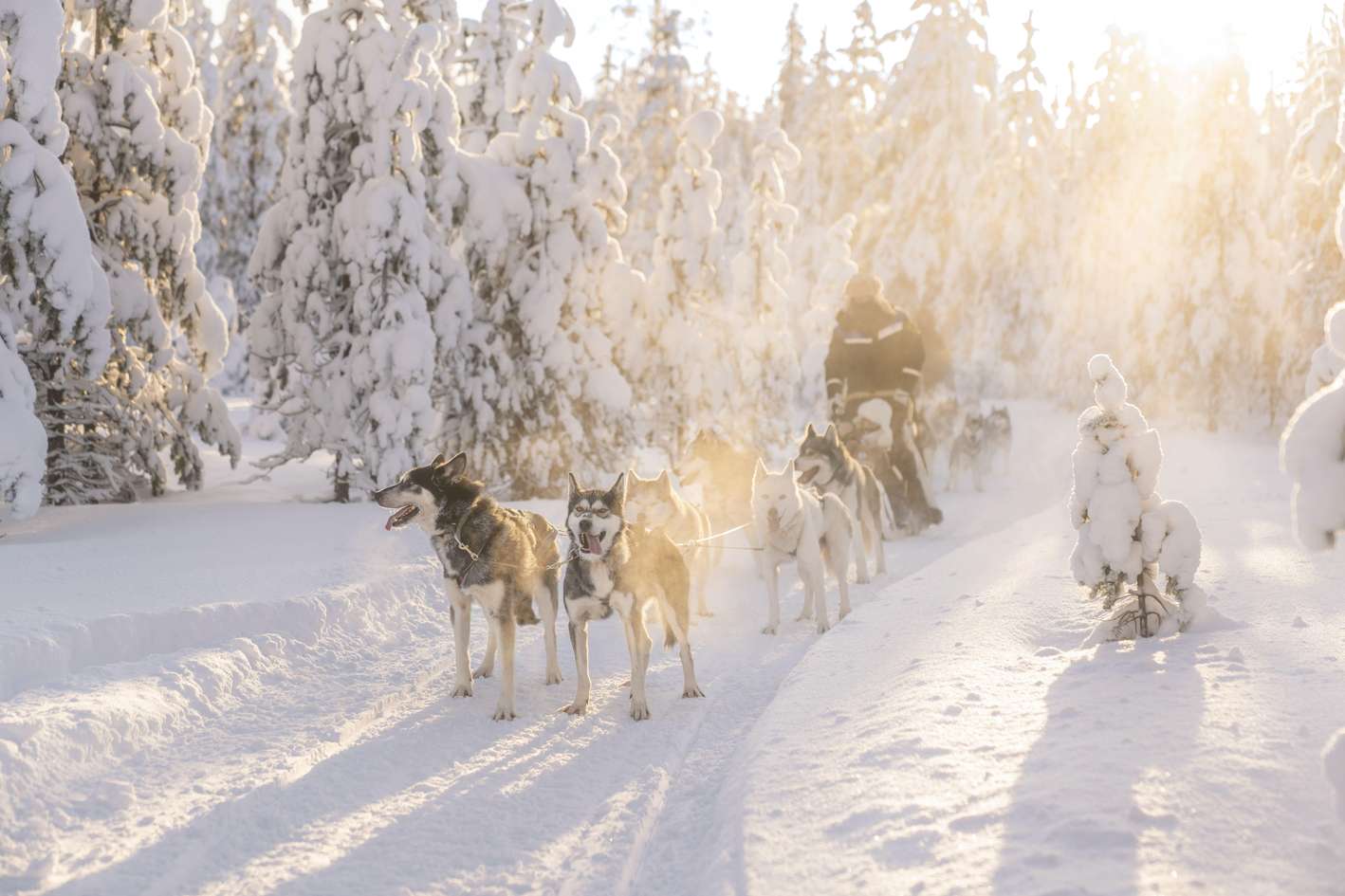
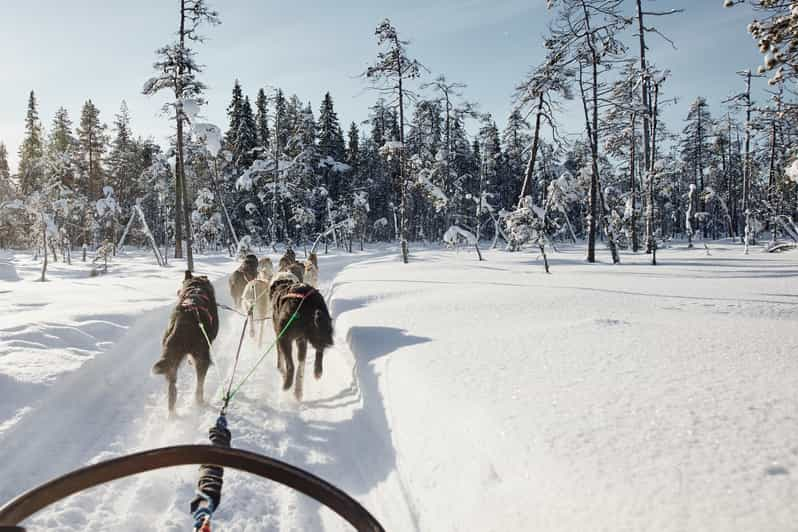
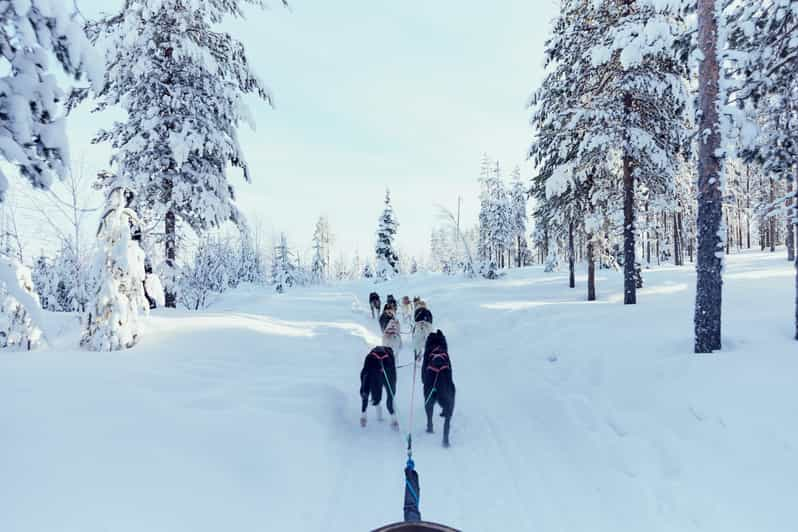
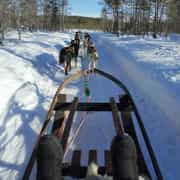
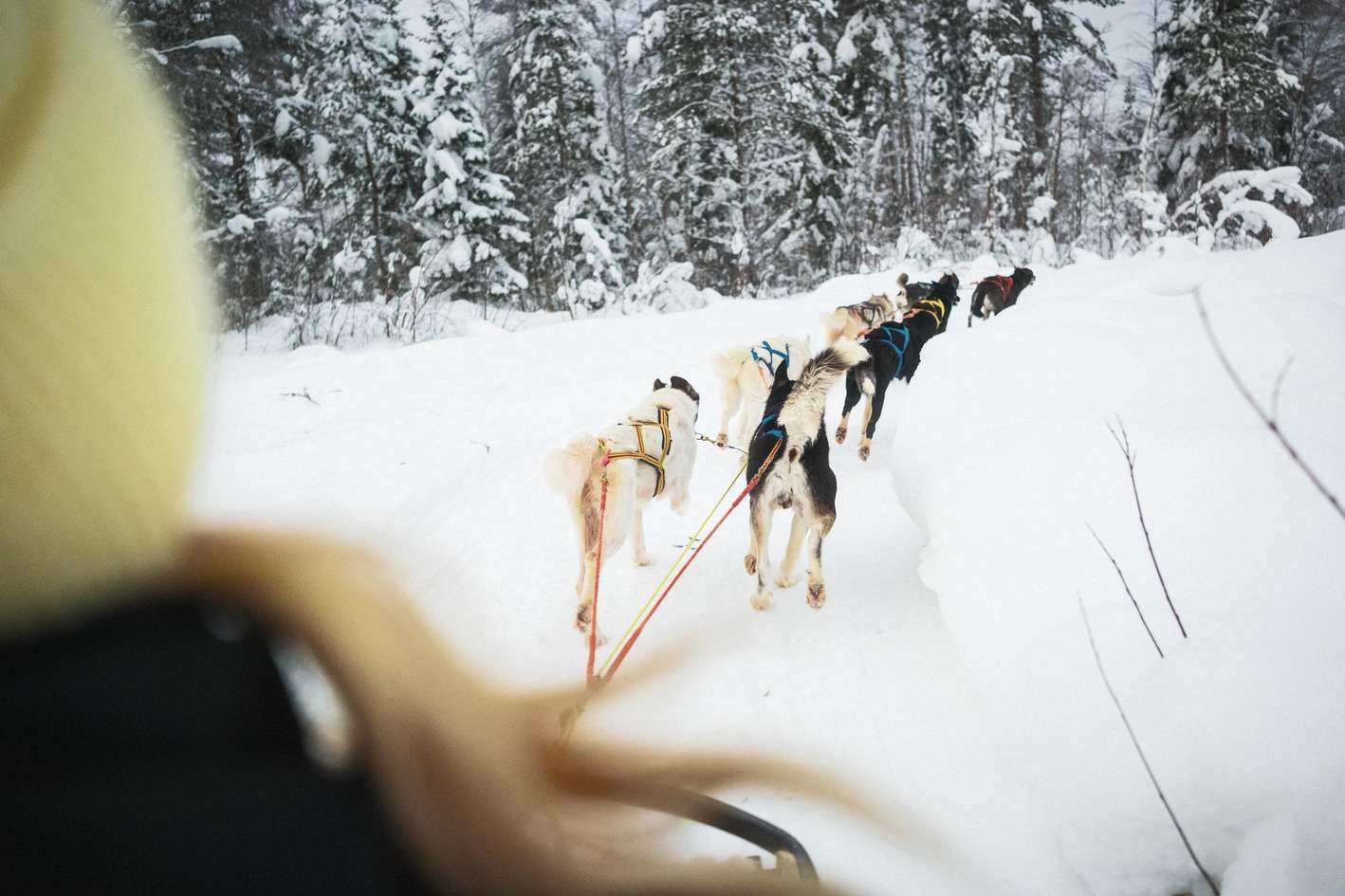
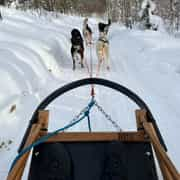
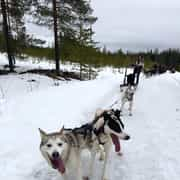
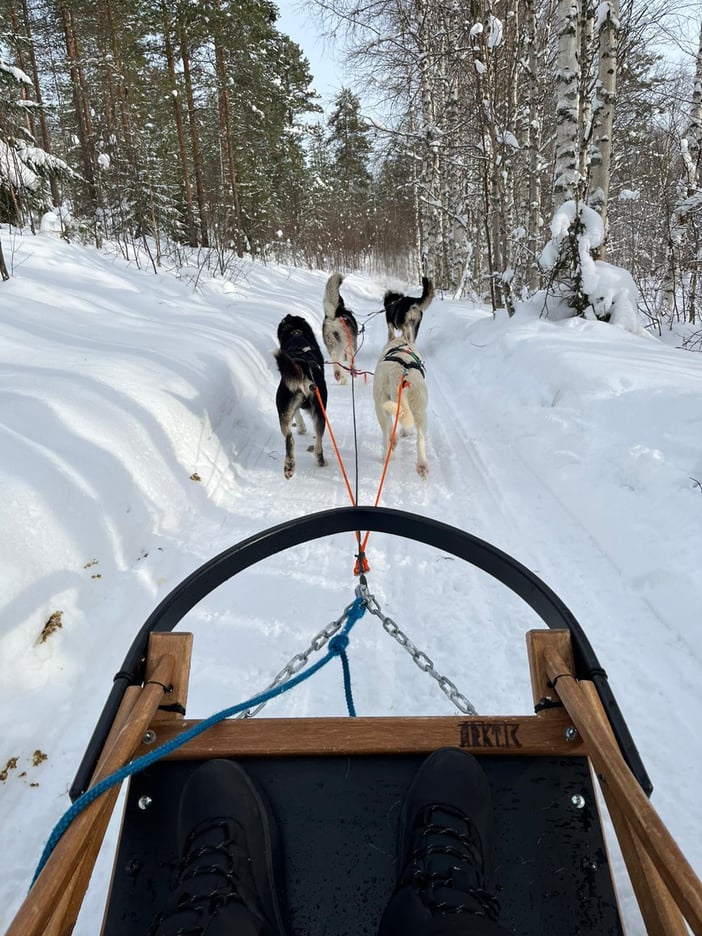
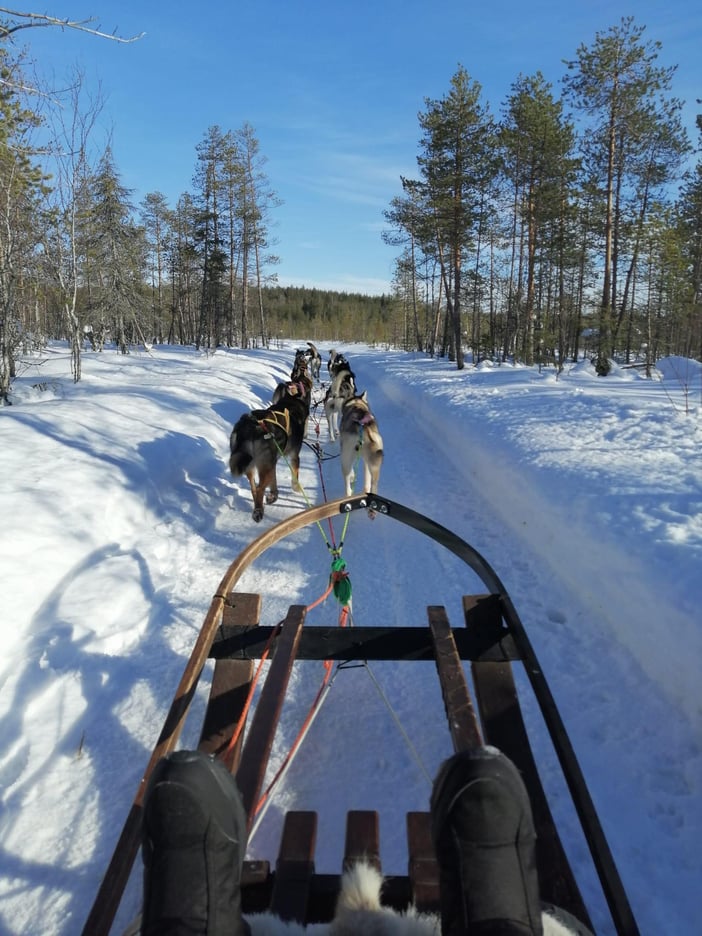
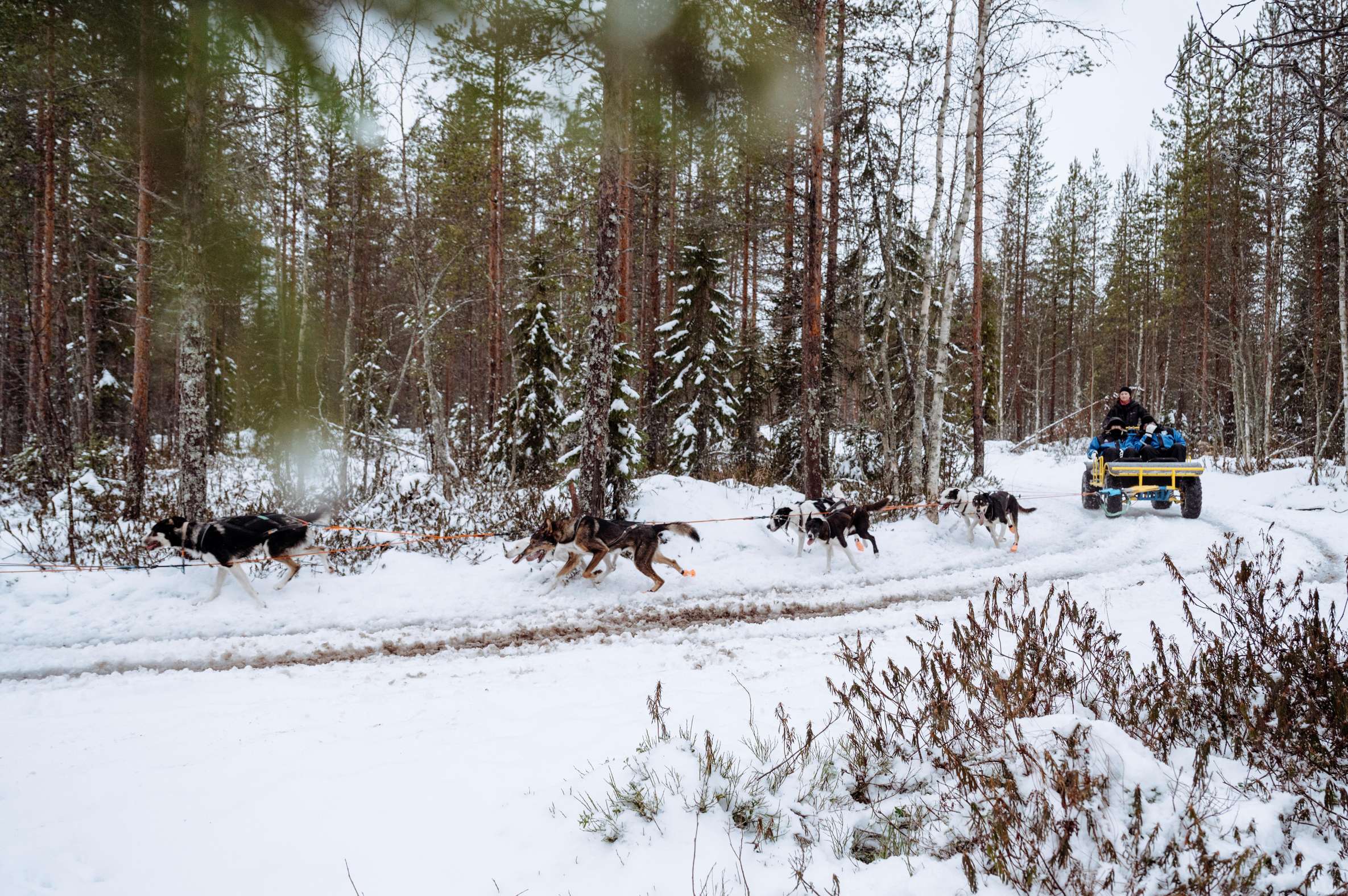
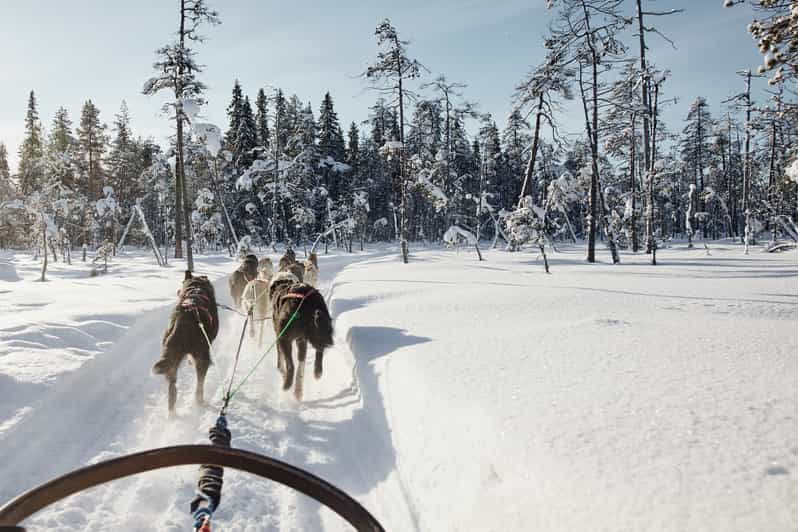
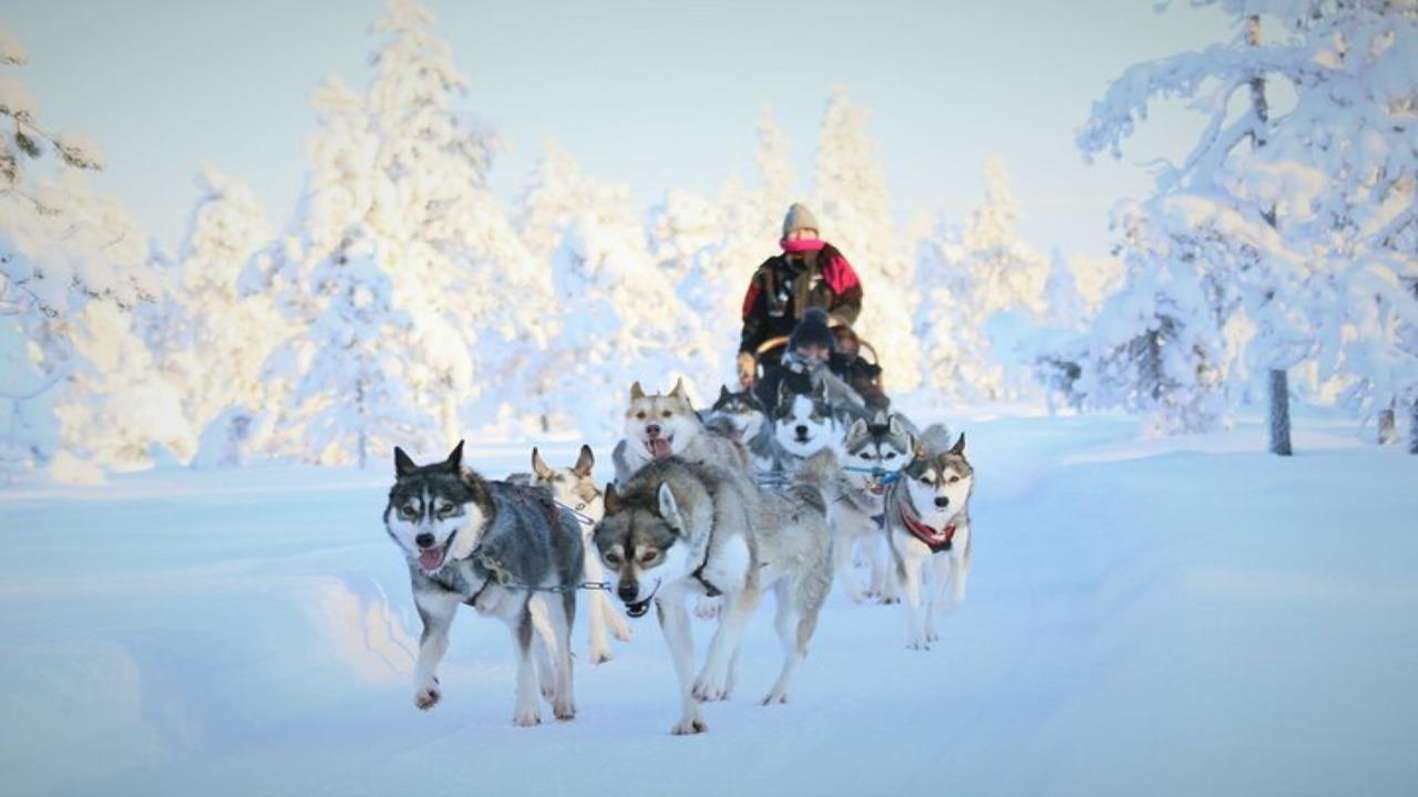
On the self-drive safari you stand on the runners of your own sled and steer a team of six to eight dogs along a private 4 to 5 km forest trail, with a briefing on the brake, the handlebar and the voice commands before you start.
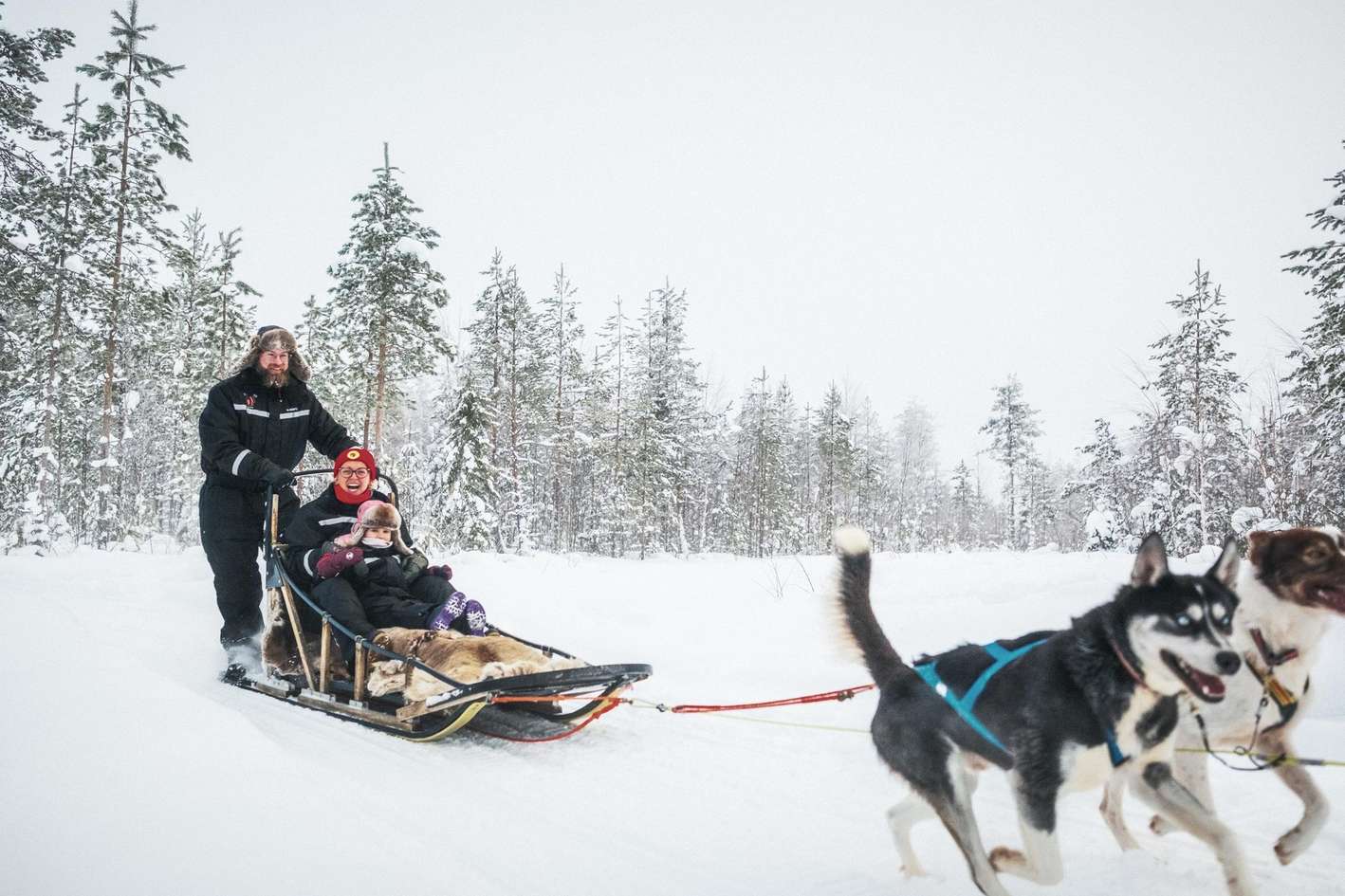
Two adults usually share a sled and swap driving and riding duties halfway, so everyone gets time at the handlebar. The ride runs about 30 minutes depending on snow and the pace of the dogs, and afterwards there is a hot drink, a small snack and time to meet the huskies up close.
Pickup3 places, depending on your optionStreet ViewStop 29GR8G229+G84· 90 minA private husky farm in a quiet forest location, visited for about 1.5 hours. You get a sled-handling briefing, drive the 4 to 5 km trail, then meet the dogs and warm up with a hot drink and a snack.Drop-off3 places, depending on your optionStreet View
Included
Thermal overalls and winter bootsTransportGuidance in EnglishHusky sled ride (4-5km, approx. 30 minutes depending on conditions)Self-driving experienceHot drink and small snack
Picking the right safari 5km in Rovaniemi
sled time is 10-15 min per 5km trail
Green marks the lowest price. Prices per person.
Tour
Price
Duration
Pickup
Languages
Best for
Our pick
Rovaniemi: 4-5 km Self-Drive Husky Sled Through the Forest
4.6★ (284)
from $225per person
3 hours
yes
English
first-time mushers who want a quick forest loop and a hands-on sled
Choose your date early, because mid-December to early January slots often fill months ahead. In deep winter, a late-morning departure gives you the best daylight, since the sun sets around 1:30 pm in December.
Pro tipBook between late September and October for Christmas week, when kennels are already running out of sled spots.
RecommendedAim for a 10:30 am to 1 pm start in December, when daylight is barely four hours long.
2. Choose self-drive or passenger
Read the options carefully, because this choice shapes the day. Self-drive tours put you on the runners with a partner swapping halfway; passenger tours like the 5 km kennel ride let a musher drive while you sit wrapped in blankets.
Pro tipIf you travel alone, self-drive tours pair you with another guest or often let you drive your own sled, with no extra charge.
ImportantYou must be 18 or older to drive a sled, so anyone younger rides inside the basket as a passenger.
3. Check the cancellation terms
Look at the cancellation line before you commit, since terms differ. Most tours let you cancel up to 24 hours before departure for a full refund, while the kennel tour in Sinetta asks for seven days' notice.
Common mistakeBooking the kennel tour for your last day. If plans shift, a week's notice is gone before you realize it.
Pro tipWeather is not a worry. In extreme cold the operator shortens the route or switches to a guide-driven ride, and cancellations come with a full refund.
4. Confirm pickup or meeting point
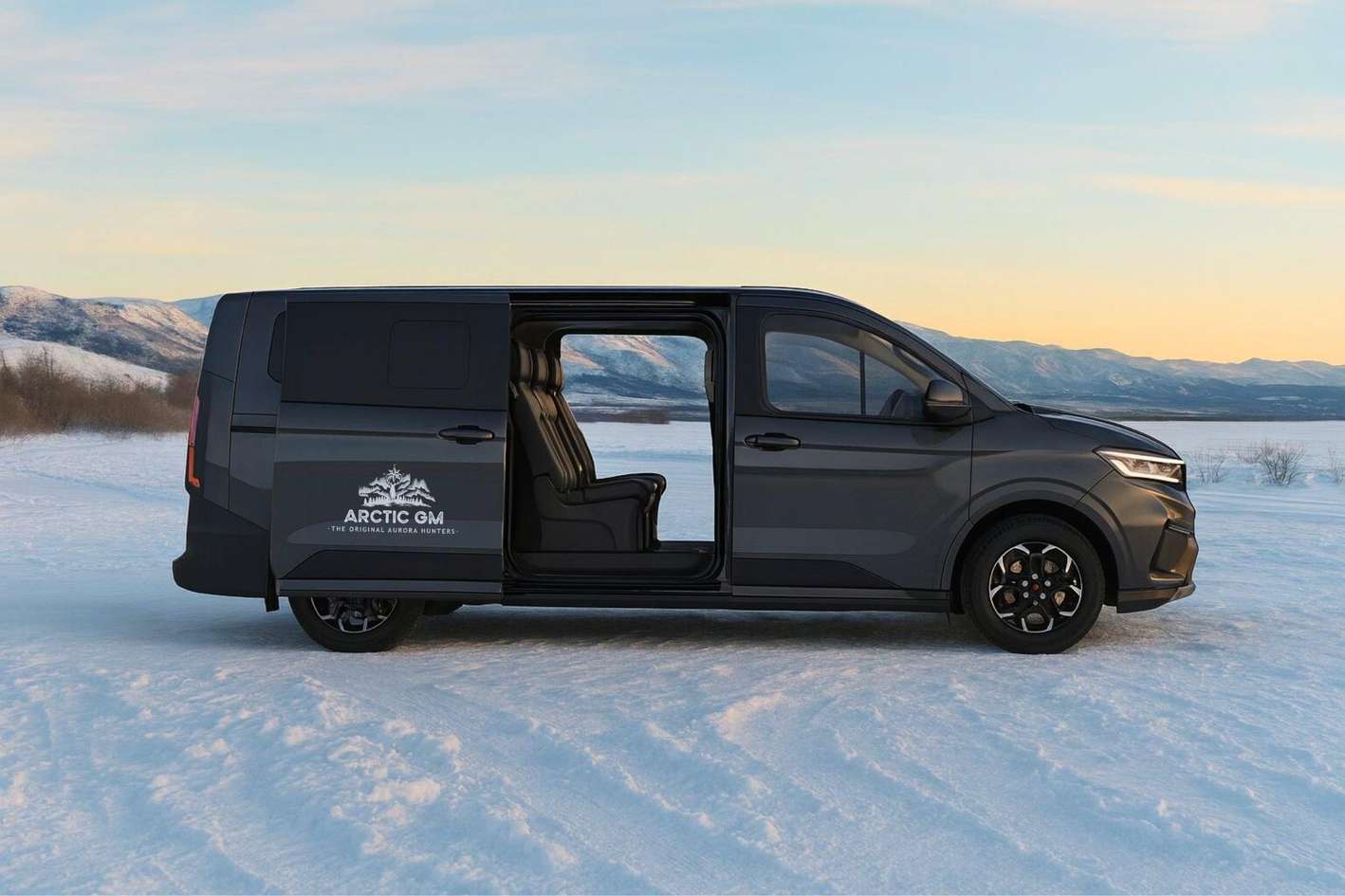
Staying in a listed central hotel means a minivan picks you up; guests at private rentals get assigned a central office or hotel lobby instead. The exact pickup time arrives in advance by message, so watch your email in the days before.
Common mistakeLeaving your phone in the hotel. If the operator's pickup time changes, you only see it through the booking messages.
RecommendedSome tours require a passport or ID at check-in, so carry it in your day bag rather than the hotel safe.
5. Be ready on the day
Wait at your pickup point 5 to 10 minutes early, because drivers leave no more than 5 minutes after the stated time. Transfers to outlying farms take 20 to 45 minutes each way, then you get fitted into thermal overalls before the dogs get harnessed.
Common mistakeDressing in cotton under the provided overalls. Wear a merino or synthetic base layer and warm trousers, since you sit still behind the driver and feel the cold most.
Pro tipKeep your phone warm in an inside coat pocket on the ride, or the sub-zero air drains the battery before you reach the huskies.
What to know before you book a husky safari 5km in Rovaniemi
one farm sits in sinetta, 15 min from town
Can stop the dayGood to knowGood news
01
ChoosingWhat it is, who it suits, when to go
2
Sled sharing
Two adults usually share one sled, with one driving and one riding, and you swap places at the halfway point. Solo travelers often get to drive the whole trail themselves. Some kennels can seat two adults plus two or three children in a family sled.
Daylight
December and January give you only a few hours of light, so aim for a late-morning or midday departure, roughly 10:30 to 1 pm in December and 10:30 to 2 pm in January. Afternoon rides can finish in the dark, which is atmospheric but hard on photos.
02
BookingHow far ahead, and what happens if plans change
2
Cold limitsCan stop the day
Tours run between about -30°C and 10°C to protect the dogs. Near -28°C to -30°C, routes get shortened or self-drive rides switch to a musher driving, and young children face stricter cutoffs around -24°C to -25°C. You get the choice of a full refund or a shorter ride when it turns extreme.
Cancellation
Most of these tours let you cancel up to 24 hours ahead for a full refund, so you can book early and stay flexible. One kennel tour asks for 7 days instead, so read that line before you commit. Operators also reschedule or refund you if extreme weather stops the run.
03
Before you goPapers, health, what to bring
4
Time on the sled
A 5 km trail means roughly 10 to 30 minutes of actual sledding, depending on snow and pace. The rest of a 1.5 to 5 hour tour goes on transfers, getting dressed, the mushing briefing, meeting the dogs and warming up by the fire afterwards. Check the advertised duration against the sled time when you compare.
Clothing
Most operators hand out insulated overalls, winter boots, mittens and socks on site. Underneath, wear a merino or synthetic base layer with a fleece or wool mid-layer, and skip cotton and denim. One guided 5 km tour provides only blankets on the sled, so dress properly for that one.
After the ride
Every one of these tours ends warm: hot berry juice, hot chocolate, tea or coffee with cookies, Finnish biscuits or grilled sausages around a fire, some in a traditional wooden kota. It is the moment to ask the mushers about the dogs and the kennel.
Health limitsCan stop the day
Self-drive safaris are not suitable for pregnant travelers or people with back or heart problems, and the sled ride is bumpy with sudden movements. Most tours take children from around age 3 or 4 seated in the sled, and only adults of 18 and over may drive.
04
On the dayWhere to be, when, and how you get there
1
Pickup
Most of these tours collect you from your hotel or a set meeting point in central Rovaniemi, and some also stop at Santa Claus Village. Wait outside 5 to 10 minutes early, because drivers leave shortly after the scheduled time. One kennel tour also lets you drive yourself to a market in Sinetta instead.
05
During the tourWhat is expected of you
3
Driving the sled
You steer by leaning your weight and slow the team with a foot brake, a toothed bar that digs into the snow. On uphill stretches you may step off and push or jog behind the sled. The one rule every guide repeats first: never let go of the sled.
Around the dogs
Wait until the guide says so before petting, and never feed the dogs or climb on them. Leave dogs in bright jackets alone, keep hands out of the fences, and skip drones entirely. After the ride there is set time to cuddle and photograph the huskies.
Batteries
Cold drains phone and camera batteries fast, so charge fully before you leave and keep spares warm in an inside pocket with a hand warmer. Flight mode saves power in the forest, and never charge a phone that has come in frozen from the cold.
A husky safari 5km in Rovaniemi - the full trail guide
one 5km run can be just 10-15 min
Five kilometres on a dog sled sounds simple. What you actually get is ten to thirty minutes of running dogs and a morning built around them. Here is how the day goes and which safari to pick.
Rovaniemi· 66.50° N, 25.73° E
If you only remember three things
1
Book months ahead: December and Christmas safaris sell out three to six months in advance.
2
Expect 10 to 30 minutes on the sled; the rest of the tour is transfers, gear and the fire.
3
Deep snow is January to mid-March; aim for a late-morning departure to catch the daylight.
Is a 5km husky safari in Rovaniemi worth it
The dogs are already barking by the time you reach the corral, a chorus that swells the moment harnesses come out. This is the part of the day you will remember, and it costs what it costs for a reason.
So what does a 5 km run actually buy? Ten to thirty minutes on the sled, with 10 to 15 the common figure at standard dog pace, and some tours stretching to 25 or 30 when snow slows the teams or pairs swap drivers.
The speeds behind those numbers differ by tour: some dogs cruise at 10 to 15 km/h, others cover the route much faster, so the same trail can take twice as long.
Against the sled minutes, the whole tour runs 1.5 to 4.5 hours door to door: transfers, thermal gear, the briefing, time with the dogs, and hot drinks by a fire afterwards.
Time on sled versus total tour duration
10-30 minTime actively on the sled
1.5-4.5 hrTotal tour schedule duration
The short loops at Santa Claus Village are pleasant, but they are passenger rides on prepared tracks, 500 meters up to a 2.5 km loop of 8 to 12 minutes. A dedicated safari goes into the forest, and you drive.
That is also why the price sits higher. Groups are kept small so the dogs are never overworked, and the tours carry real gear, professional mushers and guest transfers.
A self-driven trail costs roughly double a short passenger ride. Riders who want more sled time say a 5 to 10 km trail is the honest amount for most people in deep cold.
The tour to beat here is the Rovaniemi: 4-5 km Self-Drive Husky Sled Through the Forest, three hours door to door with thermal overalls, boots and a hot drink included, and roughly 30 minutes on the trail.
Tour for this
Rovaniemi: 4-5 km Self-Drive Husky Sled Through the Forest4.6★ (284) · 3 hours · Hotel pickup · Free cancellation
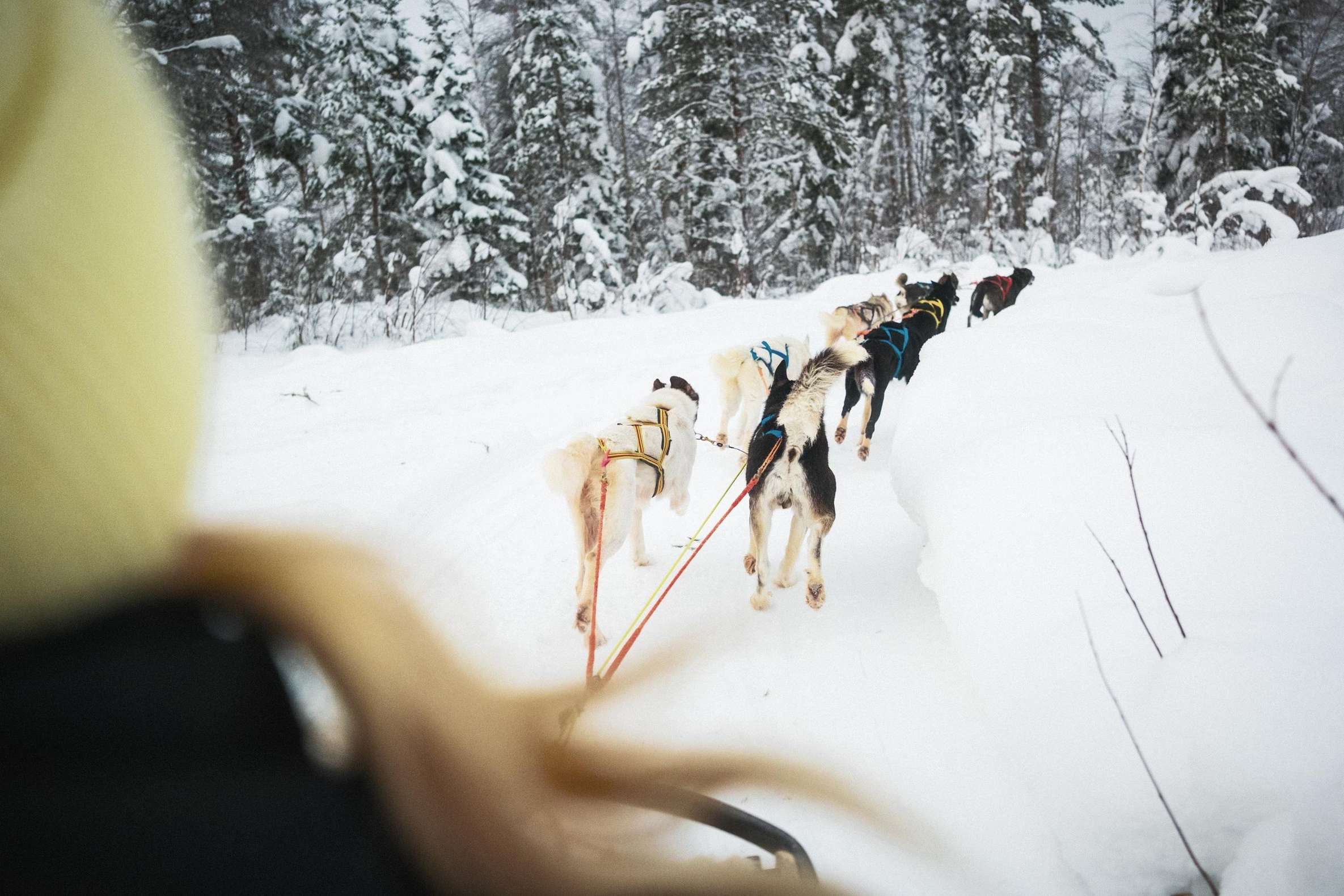
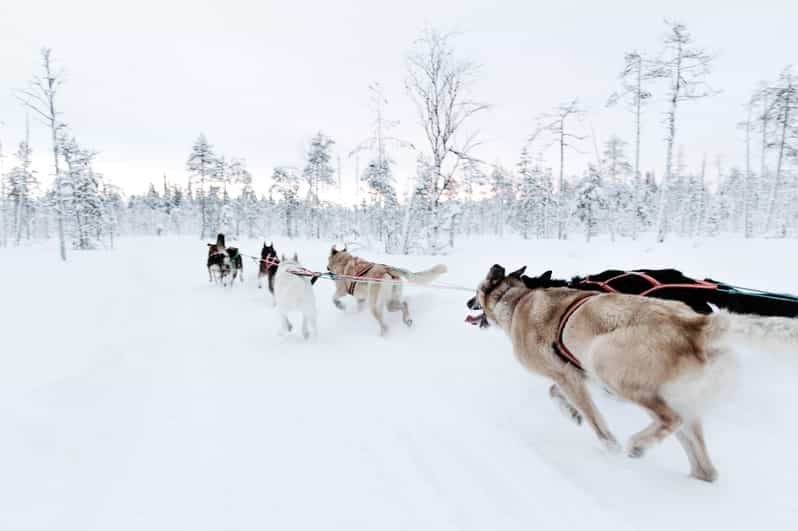
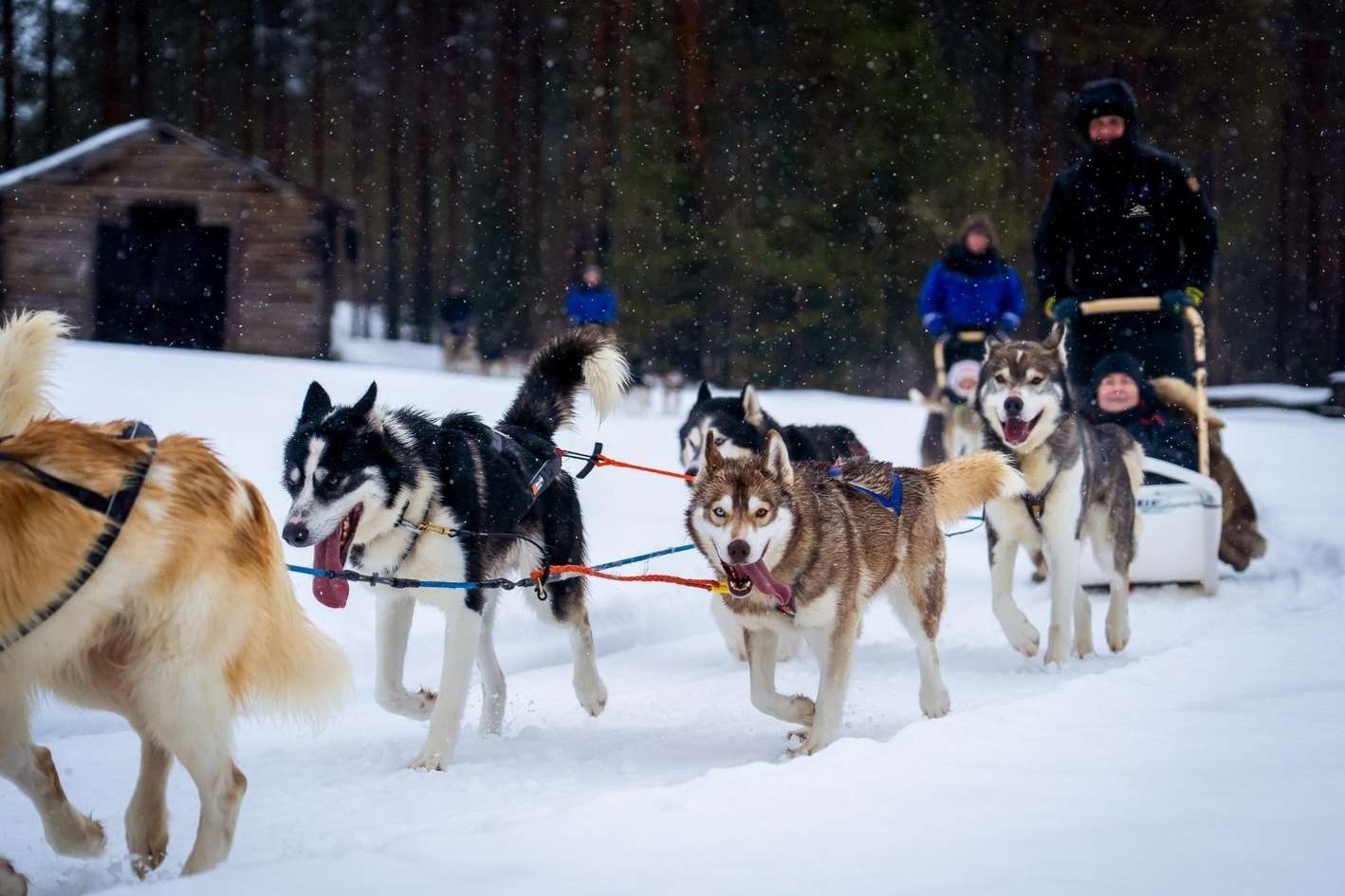
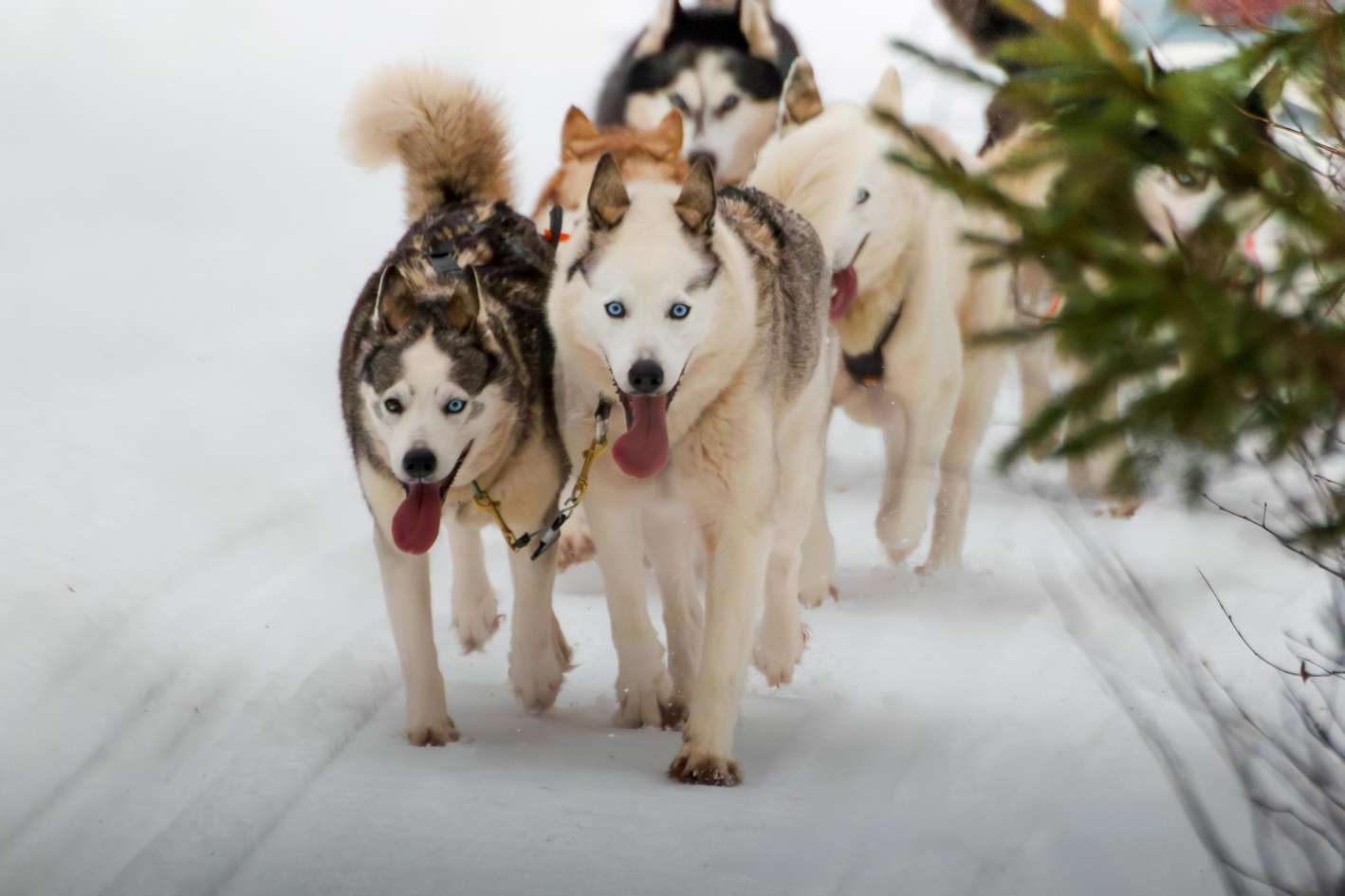
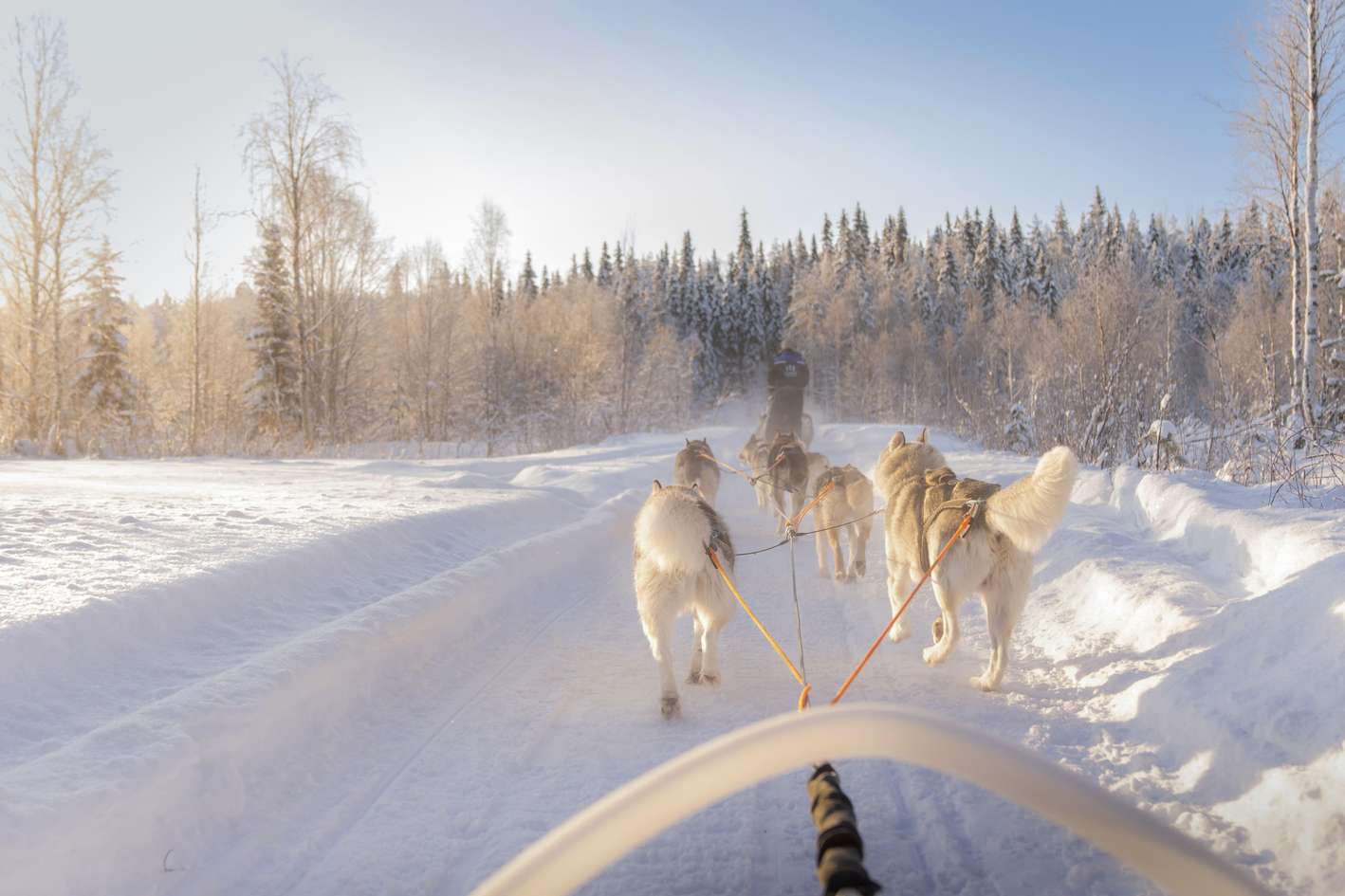
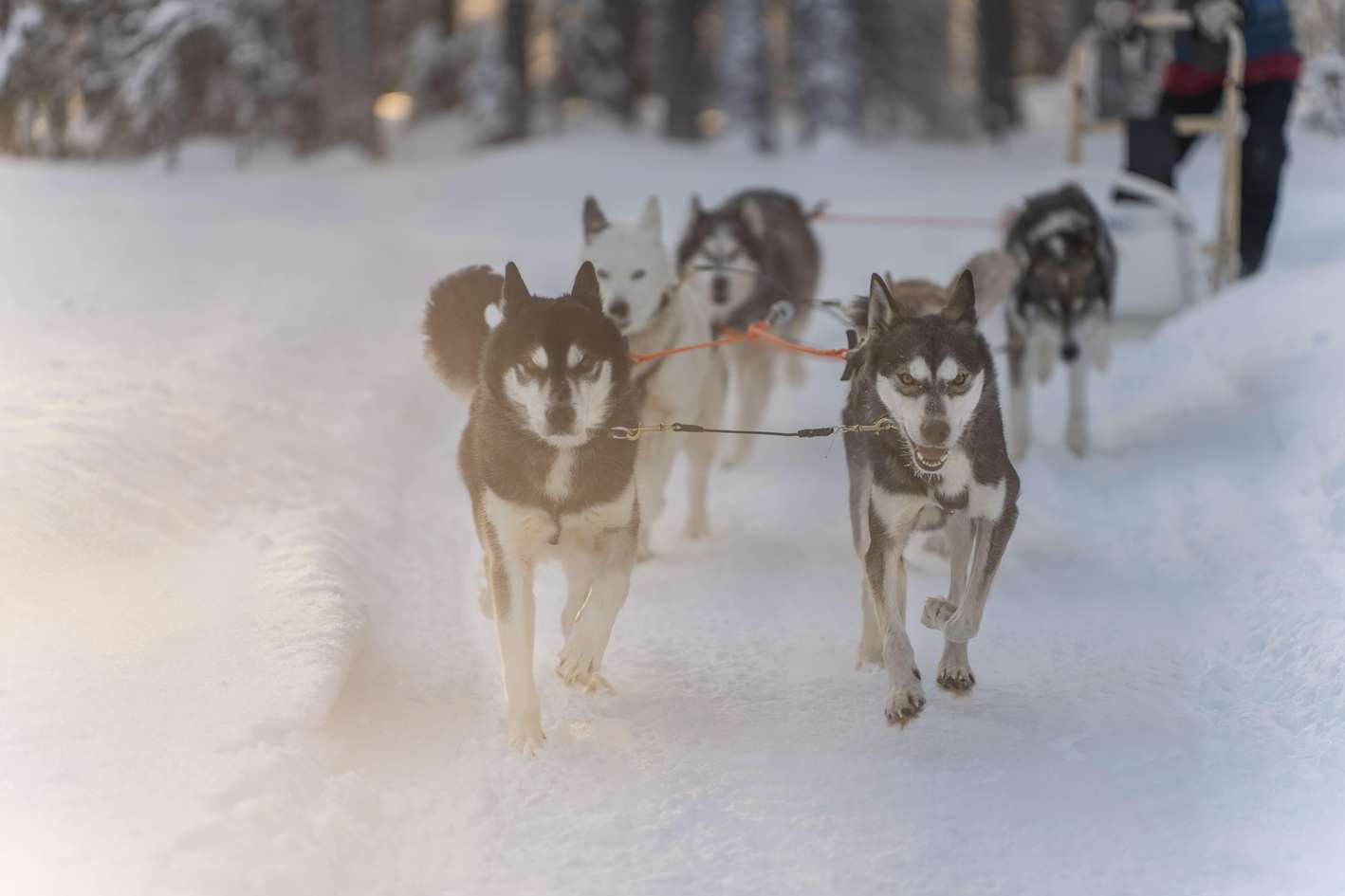
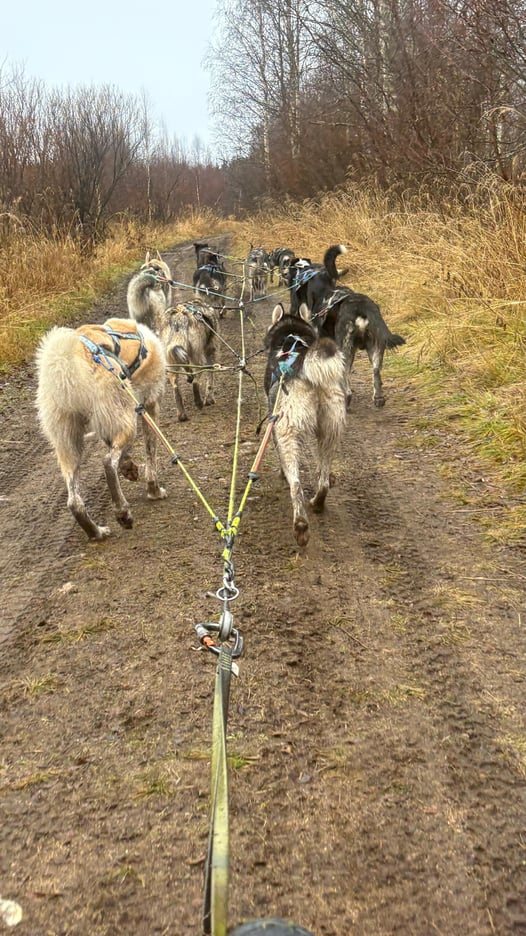
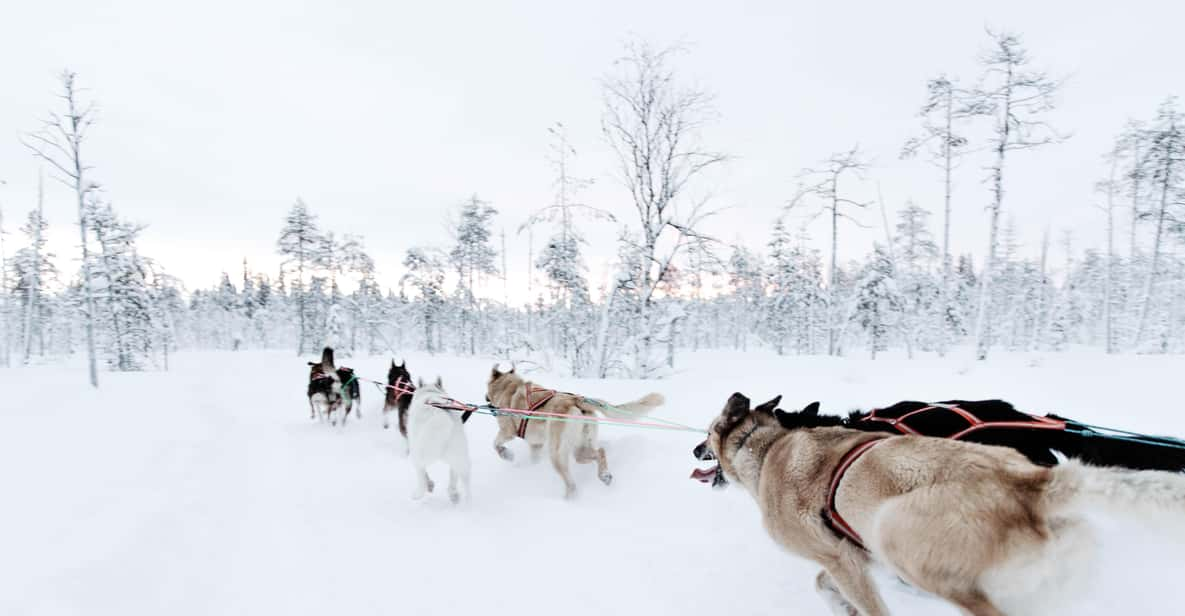
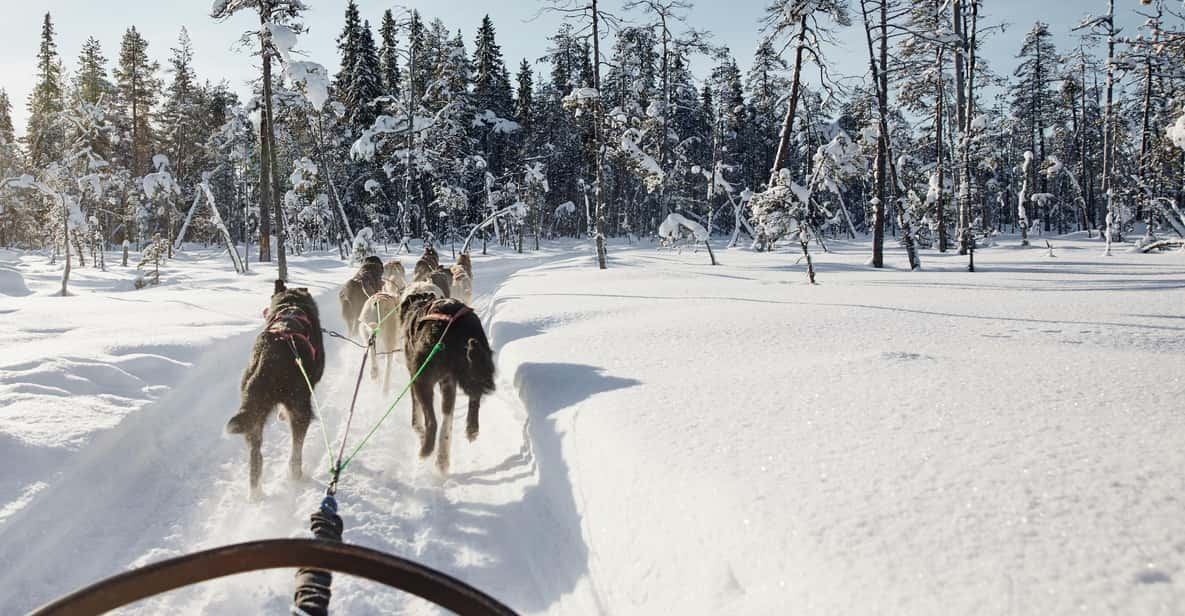
Departure is loud. The whole pack howls and fidgets the second the harnesses appear, because nothing in a husky's day matches the promise of a run. Then the brake lifts, the team surges, and the forest goes quiet apart from the patter of paws ahead of you.
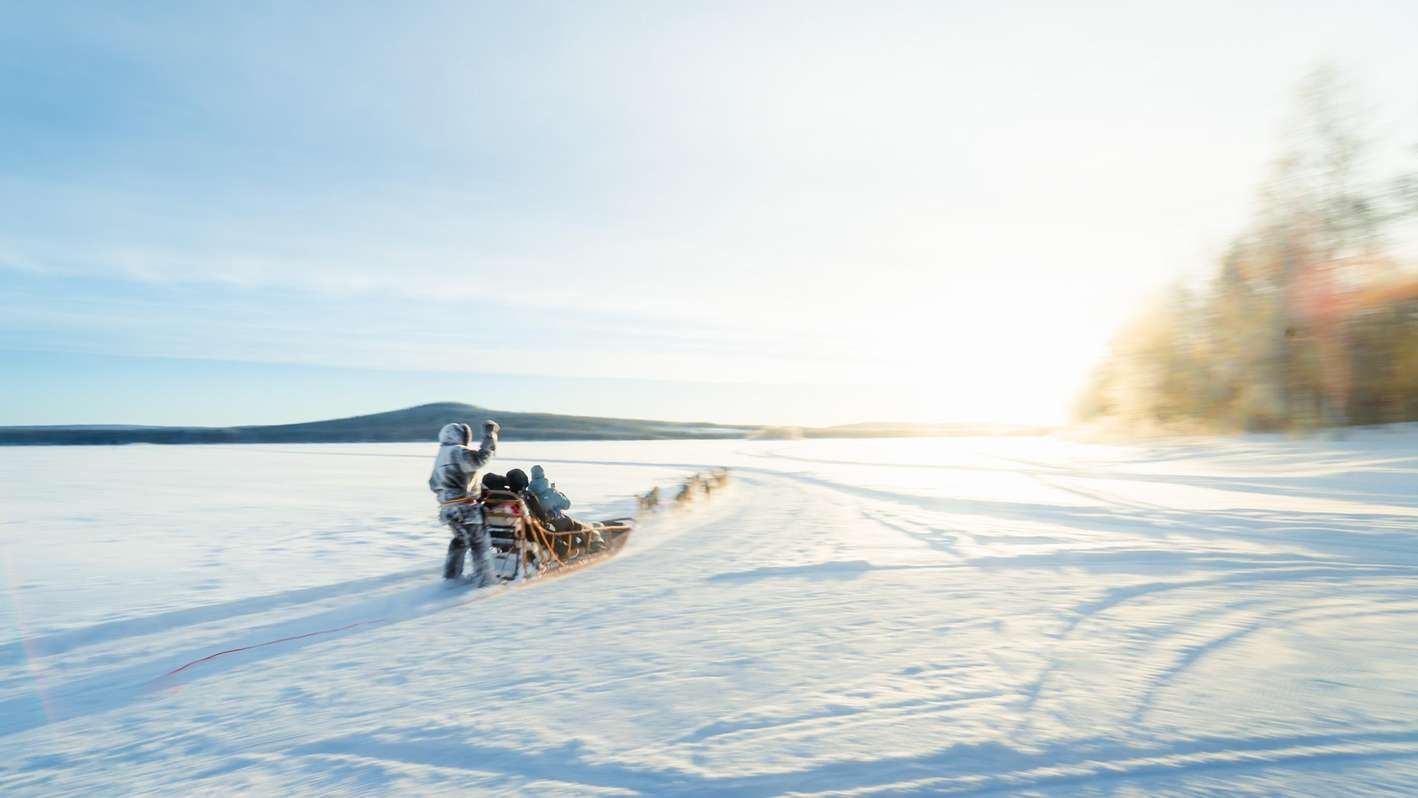
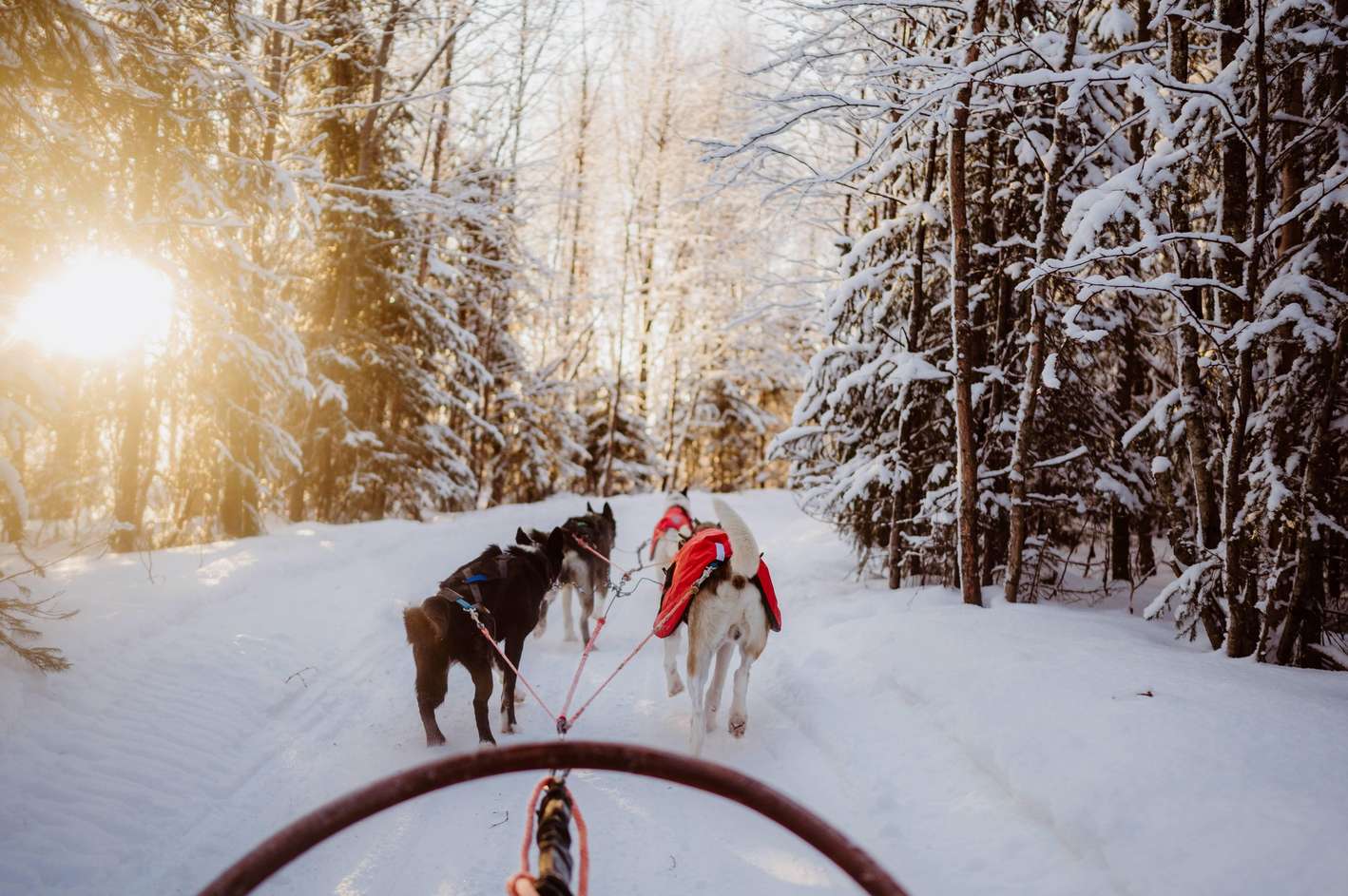
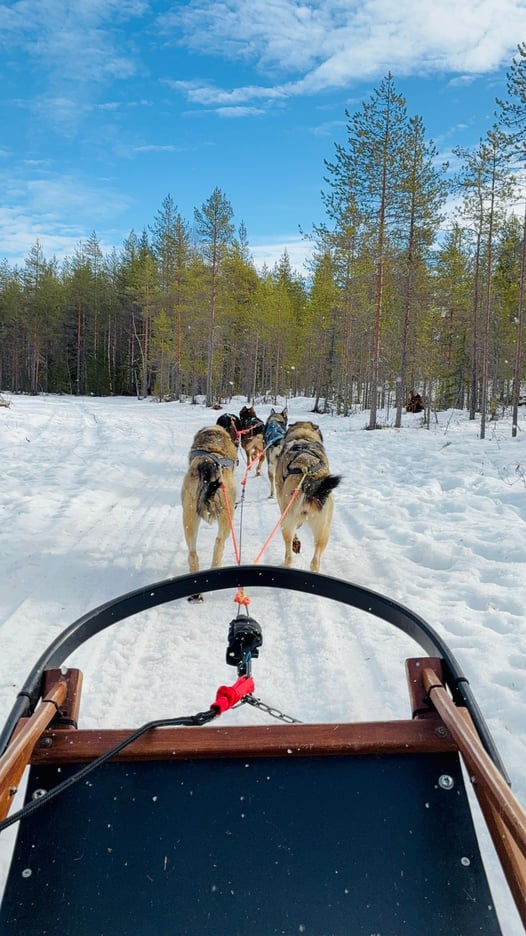
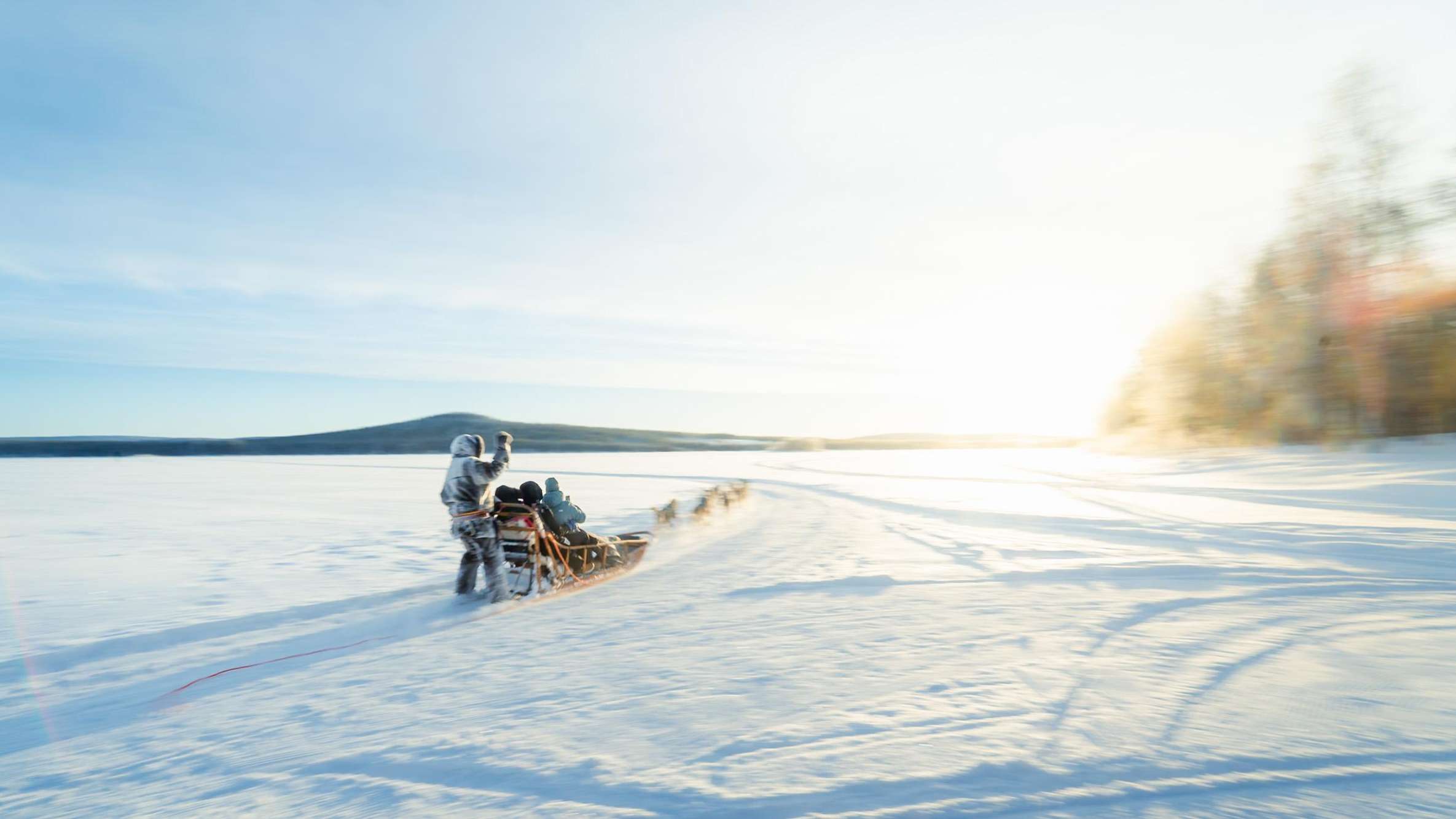
Teams cruise at 10 to 15 km/h and touch 25 to 30 in short bursts, so the wind is real. You stand on the runners, hands on the handlebar, and steer mostly by leaning your weight into turns.
The lead dogs often need nothing from you at all: on guided trails they simply follow the sled in front. Voice commands exist, "gee" right and "haw" left, but you may barely use them.
The brake is a toothed metal bar between the runners at the back. Press it down with one foot to slow the team. The one rule that matters above all: never let go of the sled.
The 5km safari hour by hour
1
Meeting the dogs
You greet the pack in the yard while the mushers sort teams
Handheld cameras out, phones stay pocketed
2
Briefing
Around ten minutes on handling, braking and the halfway swap
This is where most nervousness ends
3
The run
10 to 30 minutes of forest trail at team pace
Pairs swap driver at the midpoint
4
The finish
Back at the kennel, unharnessing and cuddle time
The dogs are calmer now than before
Climbs are the surprise for first-timers. On an uphill the driver helps: step off a runner and scoot, or jog behind and push. Nobody warns you how good that feels afterwards.
Tour for this
Rovaniemi: Husky Safari with 1, 5, 10 & 20 KM Options4.2★ (842) · 3.5 hours · Free cancellation
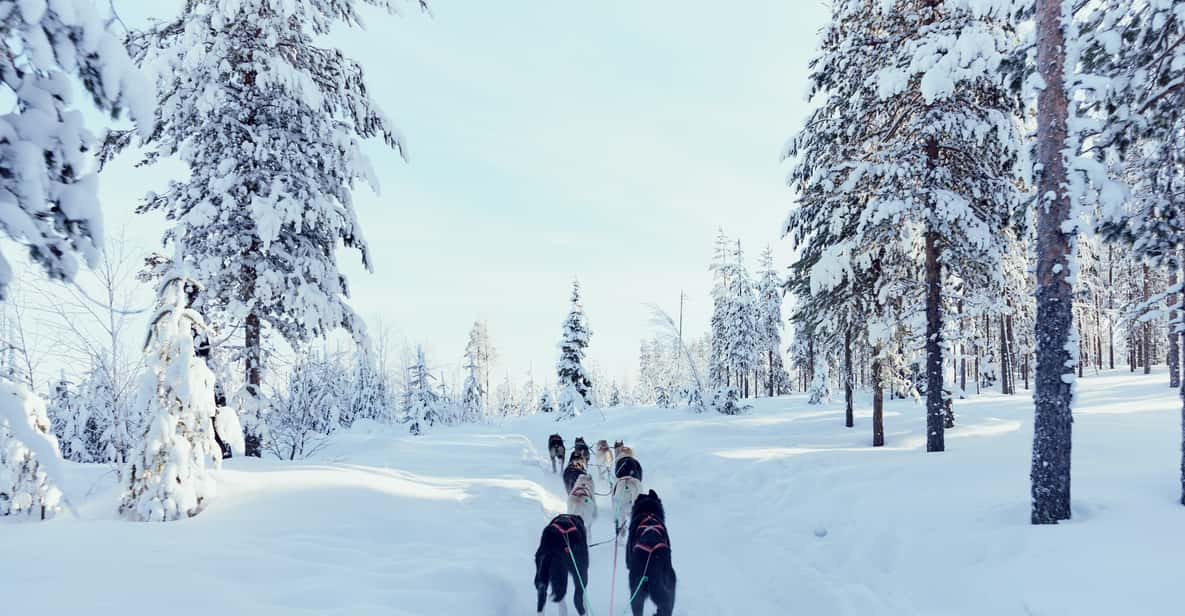
Snow decides your safari more than any other choice. January to mid-March gives the most reliable base, with firm, groomed trails that carry a full 5 km route without complaint.
The edges of the season behave differently. In late November and December the cover is thin and changeable, so rides may shrink to around 3 km or move onto wheeled carts until permanent snow settles. By late March, mild afternoons near freezing soften the trails, and operators trim distances to match.
Dog sledding conditions and visitor traffic by month in Rovaniemi
January: 5 out of 5 for how busy it gets. Peak winter crowds experience firm snow and well-established forest tracks ideal for mid-distance dog sledding in sub-zero cold.
HighestDec to Mar
LowestApr to Nov
Darker: a higher how busy it gets score, out of 5
Tap a month to read it.
December: snow on 14.6 days. Visitor numbers surge for the holidays with building snow cover, though routes are typically restricted to shorter distances.
HighestDec to Jan11.2 to 14.6 days
In betweenFeb to Apr, Oct to Nov5.2 to 9.6 days
LowestMay to Sep0 to 2.6 days
Darker months: higher, from 0 to 14.6 days
Tap a month to read it.
July brings peak summer warmth with very few visitors, and dog sledding tours do not run.
HighestJun to Sep12.8 to 21 °C
In betweenApr to May, Oct3.9 to 11.4 °C
LowestNov to Mar-6.7 to -1.1 °C
Darker months: higher, from -6.7 to 21 °C
Tap a month to read it.
Daylight is the other constraint. December gives you sun shortly before 11:00 and dusk by half past one, so a late-morning or midday departure is the slot to aim for.
In January the window stretches a little, roughly 10:30 to 2 pm. Book an afternoon run and you may finish in the dark, which is atmospheric but hard on photographs.
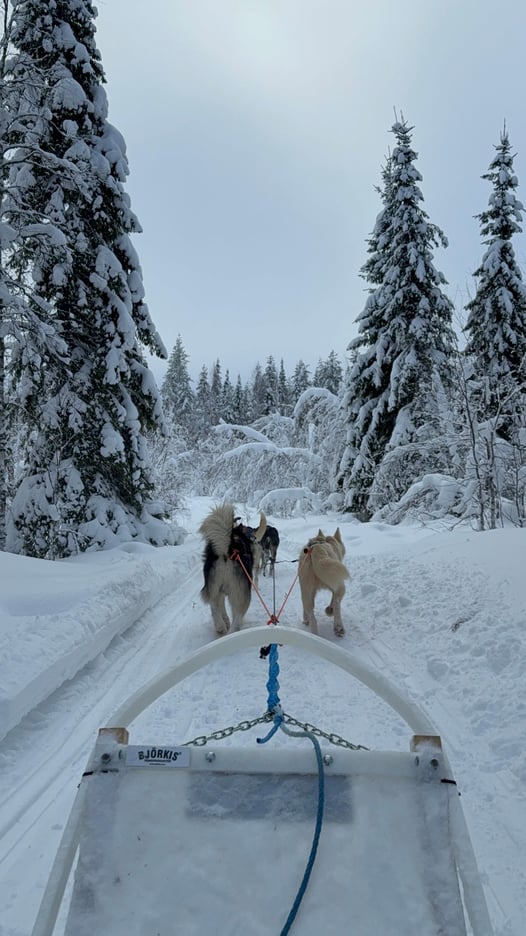
Deep winter has a bonus the calendar doesn't show. When fog and moisture freeze onto the trees below about -20°C, the forest builds those heavy, sculpted snow-laden forms locals call tykky. A trail lined with them is worth the cold.
Tour for this
Rovaniemi: Drive Your Own Husky Team (5-8 km)4.4★ (460) · 5 hours · Hotel pickup · Free cancellation
First decision: reins or blanket. Self-drive tours put you on the runners after a briefing, and pairs swap driver halfway. Musher-driven tours, like the Running with the Pack 5km ride, keep a guide steering while you sit wrapped in the sled, which suits families and anyone wary of the speed.
Second: how much trail. Five kilometres means 10 to 30 minutes of sledding, depending on the dogs and the snow.
A 10 km route stretches that to 30 to 50 minutes, and one operator estimates about 45 minutes for its 10 to 12 km self-drive. If the shorter run leaves you hungry, that is the upgrade.
How the 5 km and longer rides compare
5 kmshorter trail distance
10-15 min5 km sled time
about 45 minlonger sled time
3/5longer ride effort guide
Two honest cautions. Fresh snow slows the dogs and shrinks the distance, and recent 5 km riders have sometimes wished the route were longer. Self-driving is work: braking, balancing, pushing uphill.
Time needed for a 10 km safari
4 to 5 hourstotal door-to-door duration
40 to 55 mintime sledding on the trail
45 minone-way transfer from centre
Where matters too. Self-drive safaris from 4 km up run on wilderness trails well outside Santa Claus Village; nothing self-driven happens inside the village itself. One operator bases its longer runs at a kennel about 35 km away.
Book early. Peak winter weeks sell out three to six months ahead, sometimes by the previous summer. The Rovaniemi: Drive Your Own Husky Team (5-8 km) is the pick for drivers who want a secluded farm and a small group of eight.
Tour for this
Running with the Pack, 5km Husky Ride and a Kennel Tour4.8★ (129) · 135 minutes · Hotel pickup · Free cancellation
Almost every safari starts with a drive. The wilderness farms sit beyond the bus network, 20 to 70 km out of Rovaniemi, so the transfer alone runs 20 to 45 minutes each way, closer to an hour for the most secluded places.
Most tours solve this for you. Shared minivans collect guests from designated central hotels and Santa Claus Village; if you stay in a private rental, you will be pointed to a central office or the nearest hotel lobby.
Pickup times arrive in advance, and the etiquette is firm: be waiting 5 to 10 minutes early, because drivers leave no more than 5 minutes after schedule.
Going independently? A rental car or taxi from the centre covers the distance in about 15 to 20 minutes, and the airport sits roughly 15 minutes from several farms. The local buses stop around Santa Claus Village and go no further.
If you drive, take the winter seriously. Rental cars come on studded tyres, as Finnish law requires between November and March.
Clear every window, expect braking distances far longer than at home, and know that dark, snow-covered roads take longer than any navigation app suggests. One tip travelers pass along: carry warm clothes in the car in case of a delay.
Tour for this
Rovaniemi: Drive Your Own Husky Team (5-8 km)4.7★ (29) · 5 hours · Hotel pickup · Free cancellation
The rules are simple and worth checking before you book rather than at the farm gate.
Driving a sled is an adults-only job: only people 18 and over take the reins, and anyone younger rides inside the sled basket.
Children from about 3 or 4 years old ride as passengers on several 5 km safaris, tucked low under a blanket and sheltered from the wind, though the pace can startle little ones used to short flat loops. Under-threes are generally left off full safaris altogether because of the cold exposure.
The honest exclusions: pregnant travelers are advised off these rides, and so are people with back or heart problems, because the trail is bumpy with sudden movements. Tours are also not built for wheelchair users or anyone with limited mobility.
Check before you book a 5km safari
Self-driving requires drivers to be 18 or over Younger riders sit as passengers in the sled Pregnant travelers and people with back problems are advised off these rides Choose a gentle, musher-driven ride instead or skip it Solo travelers pay no supplement You share a sled with another guest or often get your own team
Sleds carry weight limits that vary by operator, typically somewhere between 160 and 250 kg per sled, with individual caps around 120 to 130 kg. If your group sits near the top of a range, mention it when booking so the pairing works.
Most operators dress you for the Arctic: insulated overalls, winter boots, often mittens and woolen socks on top of your own clothes. A few shorter tours skip the outer gear, so confirm when booking rather than shivering through the transfer.
What they cannot lend you is what goes underneath. Wear a merino or synthetic base layer, top and leggings, with a fleece or wool mid-layer, and leave cotton and denim at the hotel because they hold moisture and chill you fast.
When it sits near -15°C, plenty of riders simply pull the operator's overall over their own jacket and trousers and call it done.
Winter husky tour clothing and layers
Thermal overall (provided)Insulated one-piece suit provided by most kennels to wear over your clothes as a windproof, heat-trapping Arctic outer shell.
Winter boots (provided)Heavily insulated Arctic snow boots supplied on site to keep feet dry and warm on frozen trails; sized to fit over thick socks.
Merino wool base layerLong-sleeved top and leggings in wool or synthetic fabric; avoid cotton, which absorbs moisture and cools down rapidly against skin.
Fleece or wool mid-layerA fleece jacket or wool sweater with warm trousers to trap heat under the overall; avoid rigid jeans, which restrict circulation.
Warm beanie and neck gaiterA wind-blocking hat covering ears and a fleece buff or balaclava to shield exposed facial skin from intense sled wind chill.
Wool socksOne pair of thick thermal wool socks inside boots; packing tight double layers compresses air space and makes feet colder.
Thin glove linersLightweight inner gloves worn inside heavy operator mittens so fingers stay warm when handling a phone or camera on the sled.
Remember who freezes first. The driver works the whole ride and stays warm; the passenger sits still facing the wind, and the moving sled makes the air feel 5 to 10 degrees colder than the thermometer says. Blankets or reindeer skins help, but the passenger should be the best-dressed person on the sled.
Two small tricks from people who have done this: keep your phone in an inside pocket against your body, fully charged and in flight mode, and never charge a phone that has come in frozen from the trail.
And no, nobody expects a tip in Finland. Guides earn professional wages; a voluntary one for an exceptional day is appreciated and never required.
Tour for this
Rovaniemi: Self-Drive Husky Safari with a Reindeer Farm Visit5.0★ (73) · 4.5 hours · Hotel pickup · Free cancellation
The cold is managed, not endured. Operators work to clear welfare limits for the dogs, and the rules kick in at temperatures that sound extreme to most visitors.
Between -28°C and -30°C, runs shorten and self-drive tours frequently become shorter, musher-driven circuits so nobody spends longer in the wind than needed. Below -30°C the self-drive option suspends, and you choose between a full refund or a shortened ride with the musher steering. At -35°C or colder, tours cancel outright.
When the weather turns on your safari
If this happens
What happens then
Cold between -28°C and -30°C
Runs shorten or switch to guide-driven circuits
Cold between -30°C and -35°C
Self-drive suspends; you take a refund or a shortened musher-driven ride
Cold of -35°C or worse
The tour cancels
Extra blankets and thermal suits
Handed out on severe cold days to cut exposure
No snow on the trails
Rides move to wheeled carts or run shorter distances
Too little snow rarely cancels anything. Wheeled carts keep the dogs running along the forest trails, so your safari goes ahead in a different shape.
On the money side, most tours let you cancel free up to 24 hours before departure, which covers a delayed flight as well as a changed mind. Book confidently early; the deadline is generous.
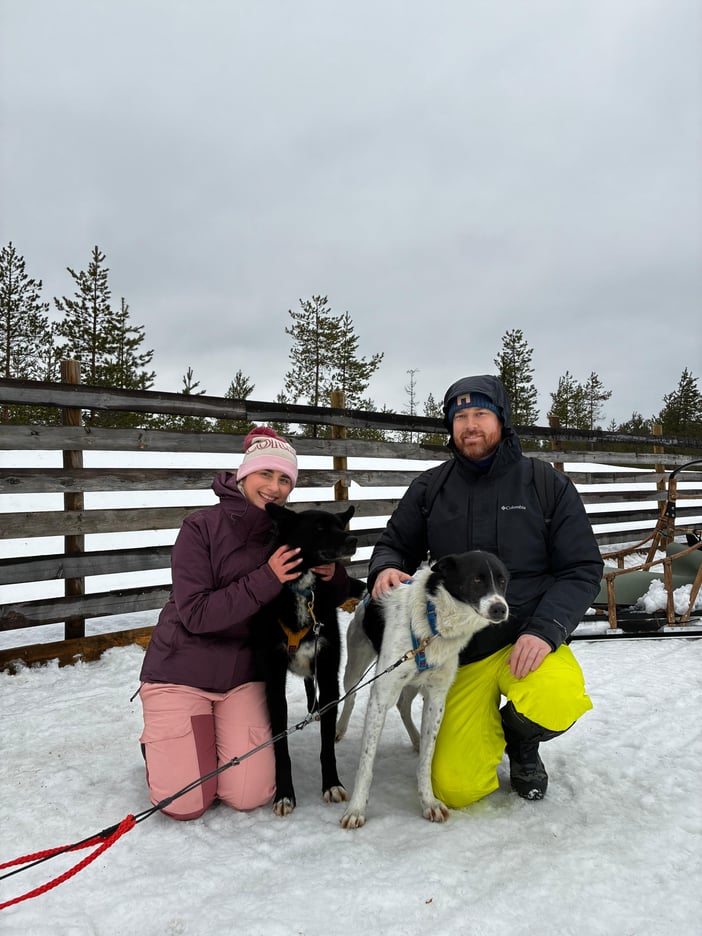
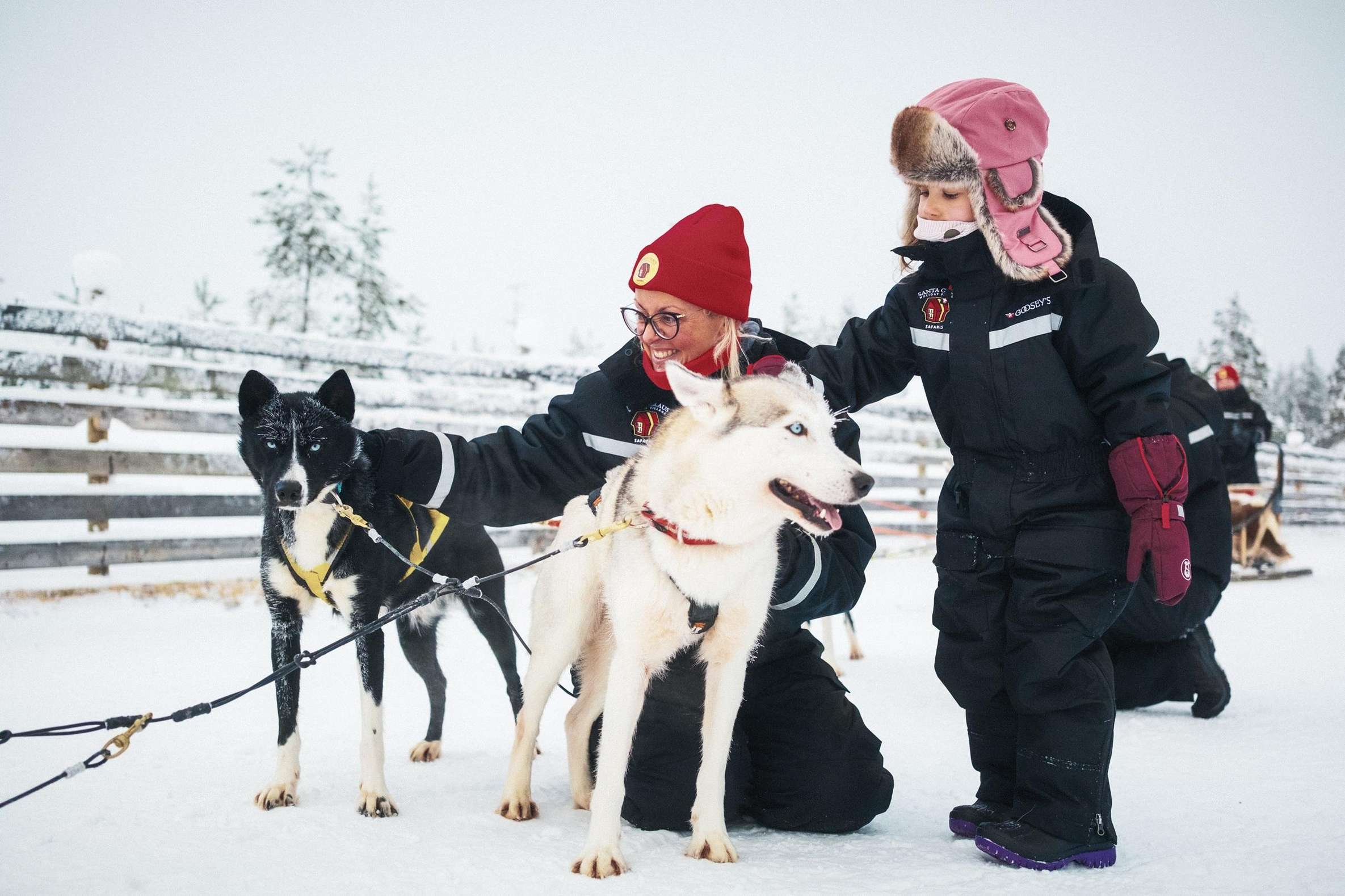
Half the day belongs to the dogs, and the good kennels treat it that way, with dedicated time after the run to pet, cuddle and photograph the pack and the puppies.
Be a guest they enjoy having. Wait until the guide says petting is on before touching a dog, and keep your hand low, letting the dog sniff you first; slow, gentle strokes along the body, no tugging ears or tails, no hugs, and no phone thrust into a face for a selfie.
Dogs in bright-colored jackets are the shy ones, so leave them be. Hands stay outside the fences and out of the feeding holes, gloves and hats stay off the ground, and feeding is off limits everywhere.
What nobody tells you
Don't touch the dogs before the tour starts
The team is working and excitable; the guide tells you when petting time begins
Leave jacket-marked dogs alone
Bright jackets mark the shy ones who want no contact
Watch how the dogs sleep
They curl nose-to-tail outdoors, tails over their noses, comfortable far below freezing
Ask about rest and retirement
Good kennels answer openly about workload, vet care and rehoming
How do you spot a good kennel? Look for insulated shelters raised off the ground, dogs that are loud and eager before a run, and mushers who answer questions about workload and retirement without hesitation. There is no official Finnish badge, so the answers are the certificate.
Running with the Pack, 5km Husky Ride and a Kennel Tour builds this half in properly: a modern kennel visit and talk about the dogs, then the trail, with transfers from the village or the city centre.
Tour for this
Running with the Pack, 5km Husky Ride and a Kennel Tour4.8★ (127) · 135 minutes · Hotel pickup · Free cancellation
The ride ends where the best part of the day begins. Boots off the runners, overalls unzipped, and the group files into a warm kota or fire hut while the dogs settle in their yards.
The table tells you what country you are in: hot berry juice, hot chocolate, tea and coffee, with traditional Finnish biscuits or cookies, and on some tours grilled barbecue sausages over the fire.
It is unhurried. The mushers swap stories about the dogs' personalities, who leads, who sulks, who howls loudest, and the photos from the trail get passed around.
A traveler's note
Loved it all. Warm welcome, smooth transport, so much fun. Learned lots about the dogs' lives, clearly well kept. After the exciting ride: grilled sausages, cocoa, hot berry juice.
People consistently name this stretch as a highlight alongside the run itself, which surprises first-timers who expected the sledding to be the whole story. Plan for it rather than racing off: the transfer back leaves when it leaves, and there is nowhere better to warm your fingers.
On one tour the break doubles as the schedule's clever bit. Groups are split in half, so one drives the trail while the other sits by the fire with the farm owner, then they trade. Either way, you leave with the smell of woodsmoke on your coat.
A 5 km safari takes half a day at most, so the rest of the day is yours to build, and the combinations around Rovaniemi work well.
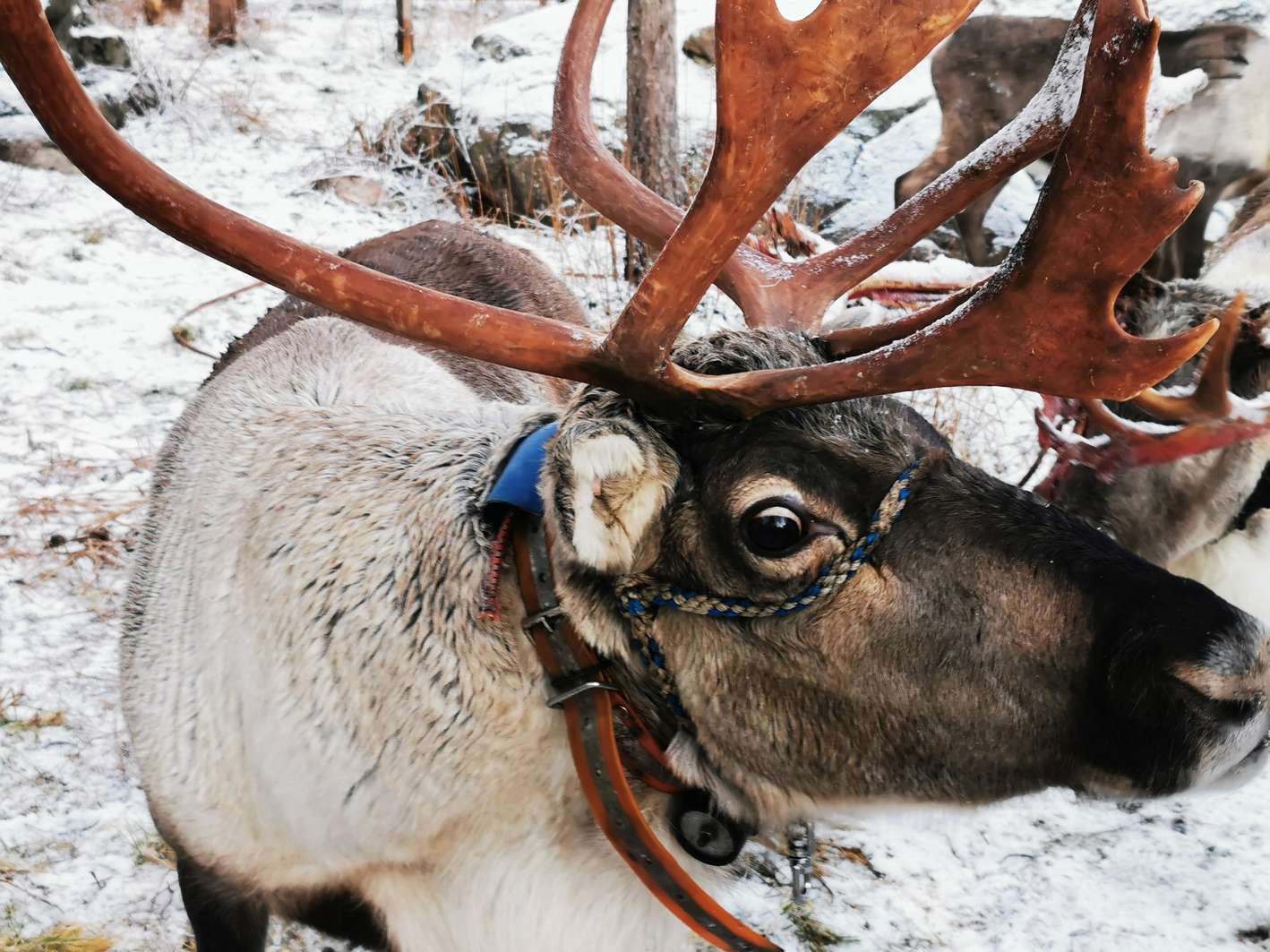
Reindeer farms pair naturally, their sleighs moving at a slow walking pace, which makes a calm contrast after the huskies. Snowmobiles can join the same itinerary too, and bundling huskies, reindeer and snowmobiles into one combo usually costs less than booking each separately.
Santa Claus Village is an easy add: no entrance fee, and the local bus Line 8 covers the trip from the centre in about half an hour.
If you want a husky ride there plus Santa plus reindeer, set aside 4 to 6 hours, because the queue for Santa alone can eat 30 to 60 minutes. Village rides stay short and passenger-only, so treat them as a taster rather than a substitute for your safari.
One honest word on the evening options. A combined husky and aurora tour rarely beats booking the two apart, because dedicated aurora hunts can drive to find clear skies while husky trails stay fixed, and no sled tour can promise lights.
Keep the aurora as a separate evening, and treat anything it delivers as a bonus. One small cultural note for trivia over dinner: dog sledding here is a tourism tradition, not an old Sami one.
A 5 km husky safari is the right first distance: real wilderness trail, real minutes on the runners, and no expedition-level commitment. Book a January to mid-March date, aim for the midday light, and go self-drive if you are over 18 and up for the work.
Go ifYou want to drive your own team, not just sit in the basketYou can travel January through mid-March, or book winter dates months aheadYour group is 18-plus drivers with children from about 4 years as passengers
Skip ifYou are pregnant or have back or heart problemsYou only have young toddlers in the groupYou expect an hour or more of continuous sledding
Our pick to book
SANSanta's Hotel Santa Claus
GRG9GR8G229+G84
Length3 hours
At 9GR8G229+G841 h 30 min
PickupHotel pickup
Rating4.6★
Rovaniemi: 4-5 km Self-Drive Husky Sled Through the Forest$225/personCheck availability →Free cancellation
Husky safari 5km in Rovaniemi - questions answered
swap drivers at the halfway point
The practical questions people ask before booking a 5km husky safari in Rovaniemi.
Rovaniemi2026
The dogs howl the moment the harnesses come out, and then it's paws and snow ahead of you. Pick the morning departure so the light lasts.
How long are you actually on the sled during a 5km husky safari?
Expect 10 to 30 minutes of active sledding, depending on snow conditions and how often you and your partner swap places. The rest of the tour goes on transfers, gearing up, the briefing, meeting the dogs and hot drinks by the fire.
Why does the tour take hours if the sled run is only minutes?
A 5km safari typically runs 1.5 to 5 hours door to door. Wilderness kennels sit outside Rovaniemi, so transfers, thermal gear, sled instructions and the fireside break take most of the time.
How does a 5km safari differ from the husky ride at Santa Claus Village?
The village rides are short loops on prepared tracks, passenger-only and driven by a musher, lasting a couple of minutes up to about 12. A 5km safari takes you onto a real forest trail, and on the self-drive versions you hold the handlebar yourself.
Do you share a sled, and do you get to swap driving halfway?
Two adults usually share one sled: one drives, one rides in the basket. On most self-drive tours you switch places at the midpoint, so both of you get a turn at the handlebar.
What if I don't feel comfortable driving mid-trail?
Tell your guide. Guides can take over the sled, let you ride as a passenger in another sled, or pair you with a more confident driver for the rest of the run.
Is 5km enough, or should I book a longer trail?
Some riders finish a 5km run and wish it were longer. If you want a bigger stretch at the handlebar, a 10km route means roughly 45 minutes of sledding and more pushing and braking on the hills. For a first safari, 5km is a solid introduction.
Can young children join a 5km husky safari?
Most 5km safaris take children from around 3 or 4 years old as passengers in the sled basket, wrapped in a blanket and sheltered low from the wind. A few tours set their own limits, so check the age note on the tour card before you book.
How cold does it get on the sled?
Between roughly -5°C and -20°C, a 20 to 30 minute run stays comfortable in the provided overalls, boots and mitts. The forest track blocks the open wind, though the moving sled adds its own chill, so cover cheeks and fingers well.
What happens in really extreme cold or thin snow?
Operators protect the dogs first. Around -28°C to -30°C they shorten routes or switch self-drive runs to musher-driven rides, and they may swap sleds for wheeled carts when snow is missing. Severe cold or bad conditions can also mean rescheduling with a full refund.